“The sonnet, like poverty, teaches you what you can do / without. ‘To have, as my mother says, a wish in one hand / and shit in another. That was in answer to I wish I had” – Diane Seuss, “the sonnet, like poverty, teaches you what you can do”
Writing this ahead of some already-high stakes Game Threes tonight, namely, Knicks-Hawks and Wolves-Nuggets. The Hawks don’t have a prayer beyond the first round but are fun as hell, and the Knicks seem constitutionally incapable of playing an easy series. Wolves-Nuggets are two slightly second-tier title contenders, but title contenders nonetheless. A Happy Playoffs to everyone.
What I’ve Been Reading This Week:
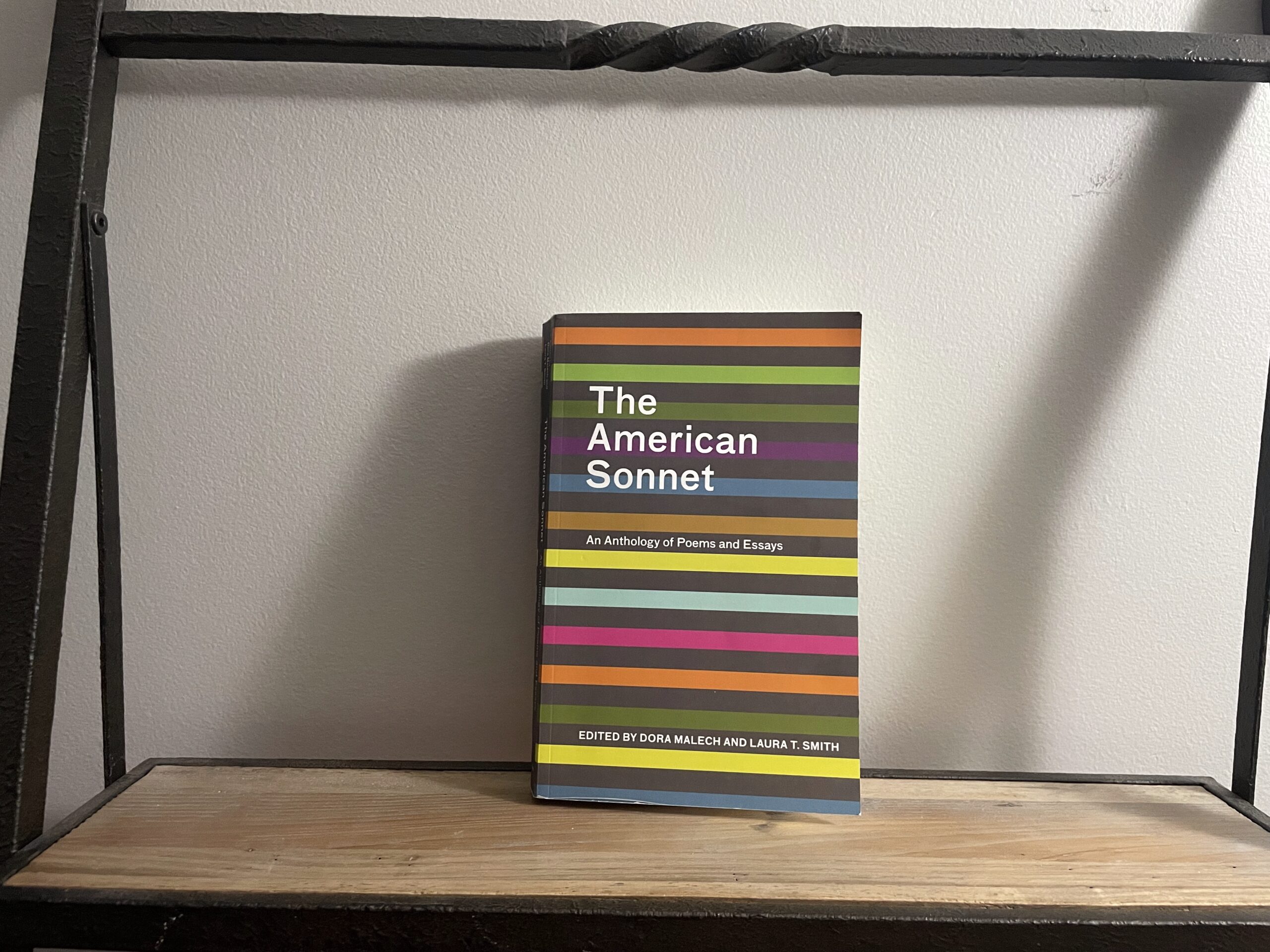
A poetry anthology and criticism book! That’s right, yr man the shipwrecked sailor read some theory. Some theory about sonnets, particularly American sonnets, a form of poetry that I am relatively passionate about. I love sonnets, those compact little boxes. Luckily, in addition to theory, this book had lots of sonnets, too. I’m talking, of course, about The American Sonnet: An Anthology of Poems and Essays edited by Dora Malech and Laura T. Smith.

The American Sonnet: An Anthology of Poems and Essays edited by Dora Malech and Laura T. Smith: it’s hard to summarize such an expansive book. It is, as the title says, sonnets (128 pages of them, spanning centuries) and essays (another couple hundred pages of them). I should say that I am not the most attentive reader of scholarly criticism, but I am a sonnet writer, and so tried to glean as much as I could. This book reinforced my personal belief that all a sonnet really needs is 14 lines, but I also resolved to start paying attention to meter at least 25% more. I also really appreciated how much sonnets, particularly American sonnets, are used for protest and subversion. The discussion of domestic sonnets, particularly with Gwendolyn Brooks, were illuminating. Not for nothing, all the poetry was super good, too. Who doesn’t love a love sonnet?
Should you read this book? If you’re a poet interested in sonnets, yes. If you’re not a poet interested in sonnets, the first 128 pages are great, if you check this book out from your local library. Whether or not you want to read the scholarly criticism is up to your personal threshold for jargon. Me, I’m keeping it on my shelf for ongoing reference and inspiration. It is unlikely I will ever read it cover-to-cover again. I’ll definitely reference the poems themselves again—you’ll be unsurprised to learn that I started really really enjoying these chronologically-arranged poems around the time it got to Patricia Smith, Tyehimba Jess, and Diane Seuss. I’ll have you know, though (internal rhyme, brag), that I enjoyed many of the pre-1960s sonnets, and even many of the pre-1900 sonnets. Someone tell Undergrad Chris, he’ll pass out.
One fun note about reading: often, the notes below a poem would point to an essay discussing the poem. So I hopped and skipped around the book, which made for a cool experience. Not the speediest way to read a book, but enjoyable.
LINKS!
Something to listen to while you browse? Mallory’s on a big Gully Boys kick recently, which is great for me. Let’s listen to Gully Boys.
- This week in ICE: US citizens shot by ICE beg Congress to rein in federal immigration agents by Ariana Figueroa in News From The States, New details emerge surrounding 2025 incident that led to a Black man being ‘choked’ by the feds in Chicago by Tonia Hill in The Triibe, Midway Blitz Is Over, But ICE Is Still Quietly Targeting Chicago Immigrants — Especially At Court by Francia Garcia Hernandez and Charles Thrush in Block Club, Philadelphia City Council passes landmark ‘ICE Out’ legislation by Emily Neil in WHYY, US Senate passes $70bn funding plan for ICE, Border Patrol in Al Jazeera
- The rest of these links are going to be from South Side Weekly‘s worker issue. Have been waiting for a chance to post some of these, and thought that they deserved their own LINKS! section. Perhaps the most important for literally everyone to understand: The Hidden Work of Caregivers by Pachina Fletcher
- Teaching the Next Generation to Touch Grass (subhed: Angie Viands teaches students at South Side Occupational Academy how to raise chickens, tend orchards, and grow microgreens.) by Susie Xu
- The Workers Behind Chicago’s Sparkling Skyline by Zara Norman
- How Laying Out a Paper Has Changed in 45 Years (subhed: An interview with our longtime layout editor Tony Zralka who retired in February after 45 years in the business.) by Adam Pryzbyl
What’re you still doing here? Go read a sonnet already!
If you work in the service industry, may you clean up in tips this weekend. The sonnet, I’ve learned, is a small space in which you can cram plenty of rebellion and status quo-upending. How can you be a sonnet in your workplace?
Sorry you got an email,
Chris
One thought on “Friday Links: Madam We Must Have Sonnets Forthwith”