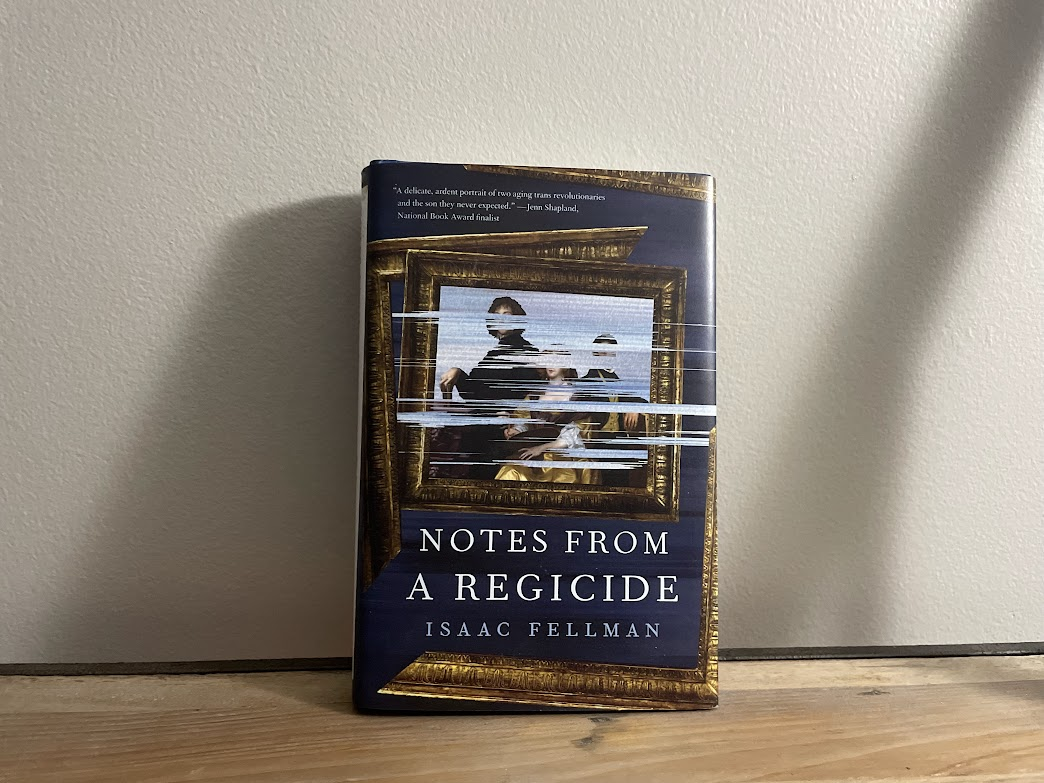
“It was true that there was an omnivorousness to the selection, but it wasn’t the thoughtless hunger of a starving person. Each painting was a dish, a tight clean nibble of sweet and sour and salt.” – Isaac Fellman, ‘Notes From A Regicide’
Everyone wants to tell Victor Wembanyama what he should do. That’s the theme of the last few months (years). NBA broadcasters, NBA podcasters, other dads on the playground, other dads who are now granddads, guys in my group chat, the guy unloading the bread truck at the deli, the nannies in the park, the dogwalkers in line at the tamale cart, the tamalero, the baristas, the street preachers. Usually it’s some variation of “get in the post and don’t take eight threes a game.” It’s true that the newest Prince Who Was Promised had a terrible Game 1 of the NBA Finals. It’s also true that every time he has a bad game in the playoffs, he bounces back. Anyway, I want to take a moment, because I have a list of things NBA fans should do in regards to 7’5″ Victor Wembanyama.
- Remember how much dude gets beat up every game. The only defense against this guy is “get a seven-footer to try to guard him physically” or “get a very strong 6’8″-6’10” guy with a low center of gravity to beat the shit out of him.” I agree that he could be more assertive close to the basket, but listen. That three-point shot he’s developed is not just a potent weapon, it’s a career-extender. Which brings me to my next point.
- Don’t assume a Spurs dynasty. Guys over 7’2″ do not have long NBA careers. Remember how 7’6″ Yao Ming, the most talented of the super giants, played only seven years? Remember how 7’7″ Manute Bol barely played 10 years, then died at age 47? Remember how 7’7″ Gheorghe Muresan played six years? Remember 7’3″ Boban Marjanović played nine years? Wemby already missed a huge chunk of last season with blood clots. Every day is precious.
- Don’t assume a Spurs dynasty. Castle, Harper, and Wemby are all max-level players on rookie contracts. The entire roster is a collection of young guys who will be due big paydays soon. Championship windows are never as long as you think they’re gonna be. I thought the 2024 Boston Celtics would run the Eastern Conference until Jayson Tatum retired. As tired as I am of hearing about the salary cap apron, this Collective Bargaining Agreement was designed to prevent building dynasties. We haven’t had repeat champs since 2018. Trust me—I can name every champion in order back to about 1976—this is unusual for the NBA. Don’t assume a Spurs dynasty is unfolding before our eyes. It’d be cool if it did, but still.
Anyway, the Finals are off to a good start! Go Spurs, but also the Knicks rock. No bad outcomes from this series, truly. I just want to note a few things I keep seeing people take for granted. Don’t take this Finals for granted.
Anyway, literature!
What I’ve Been Reading This Week
A book that I saw on a Women and Children First display table when it came out, was immediately entranced by the title, interest further piqued when I found out the author was trans, but already I had too many books in my hands and was in the checkout line. A book that I have to thank my mother-in-law for—this proved to be an excellent Christmas present. A book that, despite its evocative title, I wasn’t sure what I was getting in to. Turns out, I was getting in to a really lyrical chronicle of living with a found family of eccentric artists who also happen to be immigrants and “successful” revolutionaries. I’m talking, of course, about Notes From A Regicide by Isaac Fellman.
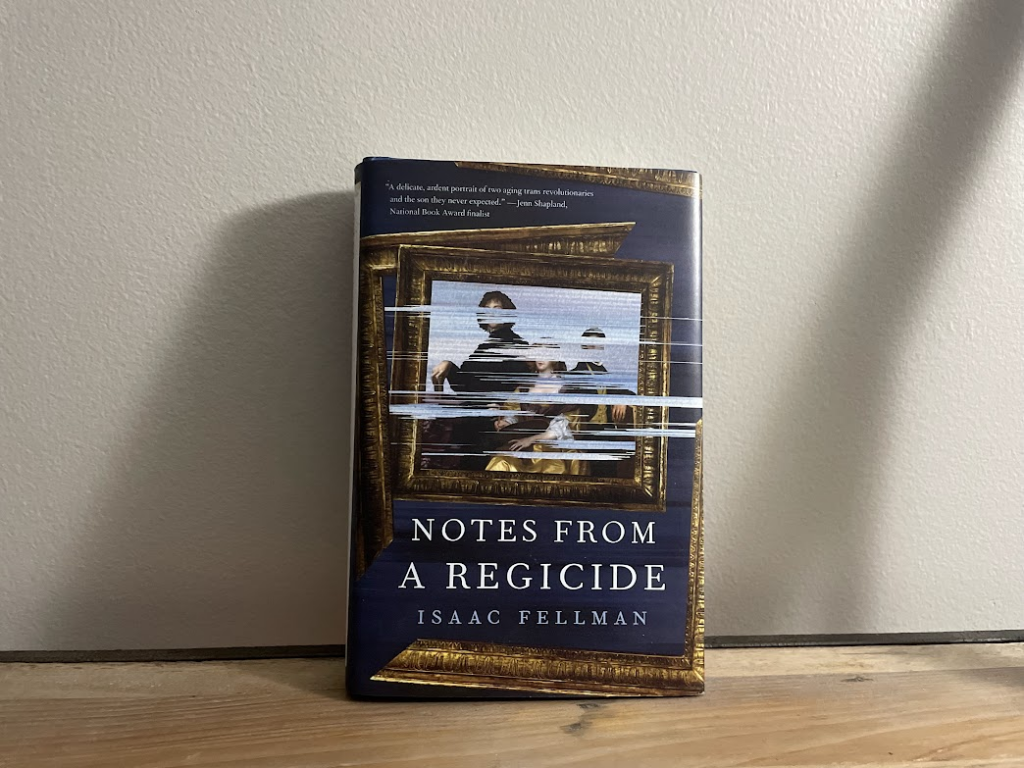
Notes From A Regicide by Isaac Fellman: just how monarch-murdery are we talking here? Well, the first thing to understand is that two stories are happening. First, narrator Griffon is telling the story of his adoptive parents, Etione and Zaffre. Griffon comes to live with them when he is 15, escaping a father who isn’t thrilled with Griffon being trans, and makes his displeasure known through violence. Etione and Zaffre, on the other hand, are also trans. They’re also a recovering alcoholic and a schizophrenic, respectively. They’re also famous and talented artists. They’re also immigrants to New York, arriving in the city shortly after a revolution in Stephensport, their home city-state. The chapters switch between Griffon’s narration and excerpts from Etione’s autobiography, which Griffon is assembling for publication.
The tyranny that the anarchists in Stephensport are attempting to overthrow is more ambient than hard-defined—although it’s possible that it took me 50-60 pages to fully comprehend everything that was going on in the text. I’m blaming my busy past month for my imperfect reading, not Isaac. What I can say is that Stephensport is authoritarian enough to have these quasi-mystic “electors” pick a prince every so often. I sorta pictured the electors like pre-cogs from Minority Report because they didn’t seem to be fully alive or dead. The Prince then names the city-state after himself. Zaffre is more of an active revolutionary, but Etoine has painted an icon of an elector who has become something of a revolutionary symbol. Think Che or Guy Fawkes. Etoine also gets thrown in prison on the whims of the prince a lot more, mostly because the prince is capricious and power-mad and evil and all of the other things that princes inherently are. Really, though, the novel is about the three main characters. Even with Etoine’s anti-authority feelings and Zaffre’s more active involvement in revolutionary activity, there is a strong sense that they are not hardline insurgents or adrenaline junkies. They’re the opposite of the French 75 in One Battle After Another. But the situation becomes too untenable for them, a trans couple mostly just trying to be artists. That’s the thing about authoritarianism, right? It keeps pushing people. Until people push back. Griffon is not assembling Etoine’s autobiography because he is a partisan firebrand, either. Griffon is a writer first and foremost, but there is the sense that he would also do some Luigi Mangione shit if push came to shove.
One thing about the world building, it is appealingly piecemeal. This is not some sci-fi/fantasy that spends chapter upon chapter laying out the rules.This setting is a thousand years in the future, characters talk about rowing boats everywhere as if New York is now made of canals, but characters also, like, get takeout. There’s top surgery and hormone therapy, but we also find out, on page 216, that many “computers and electronics” are things that this society “is only thinking about reinventing now.” Honestly, this is all a long way of saying that this novel is firmly grounded in humanity and intimacy, which makes the grander stuff—art, revolution, obliteration of the gender binary, futuristic not-quite-dystopia—feel realer, somehow. It’s exactly the kind of revolutionary novel I want to read. I didn’t even touch on the nuns who homebrew estrogen and testosterone pills. Damn. So much cool shit in this novel!
LINKS!
Something to listen to while you browse? It’s Pride Month, which, at least this week, means it’s Big Boys SZN.
- This week in ICE: Life inside the Delaney Hall ICE detention camp is a travesty by Moira Donegan in The Guardian, Sherrill, AG defend Delaney Hall protest barrier, say safety outweighs free speech by Steve Strunsky in NJ.com, Illinois Passed a Law to Keep ICE Out of Courthouses. It’s Not Working. by Katrina Pham and The Trump Administration Released A New Green Card Policy — Here’s What To Know by Tara Mobasher in Borderless Magazine, ICE Crash And Arrest In Albany Park Leaves Neighbors Furious: ‘We Should Not Have To Live Like This’ and Ex-WGN Staffer Who Was ‘Violently’ Thrown To Ground, Held By Feds Files $10 Million Claim by Alex V. Hernandez, and Protesters Want ICE Out After Chaotic Albany Park Arrest: ‘Midway Blitz Is Over, But ICE Has Not Left’ by Reemah Saleh in Block Club
- Micco Caporale’s column on QUEER WRATH in Chicago Reader is necessary reading, you could argue that this column is what alt-weeklies are for.
- Newly Poly Plover Dad Still Figuring Out His Time Management by Sabrina Imbler in Defector
- Trans teens have something to say by Grace Byron in The Verge
- This is how close American households are to the financial edge by by Stephen Bisaha in NPR
What’re you still doing here? Are you thinking about Zora’s verse on that Gully Boys song? I know I’ve linked to “Big Boobs” before. I can’t remember if I said I want to see a drag performance to this song. It feels suited to it.
If you work in the service industry, may you clean up in tips this weekend. The kids are out of school, the forecast says rain, and it’s the first weekend of Pride Month. Street festivals are gonna be starting. You, service industry, you deserve the tips.
Sorry you got an email,
Chris
One thought on “Friday Links: Is Your Family Made Of Eccentrics Edition”