“A host of factors contribute to making the experience of live music a far from objective phenomenon.” – David Byrne, ‘How Music Works’
Don’t usually title the whole column with the name of the book, but it felt appropriate. Gotta be honest, I’m a little nervous to tackle this one. There’s so much to discuss about the art form! Is this the music writing that most closely hews to my own experience of music? Maybe!
But first: a new Lazy & Entitled podcast! We’re debuting a new segment. It’s a book club segment, because we think you should read books every now and again, and also discuss them with your friends. The first book we read together? Lauren Bolger’s The Barre Incidents! Apple | Spotty | SoundCloud
What I’ve Been Reading This Week:
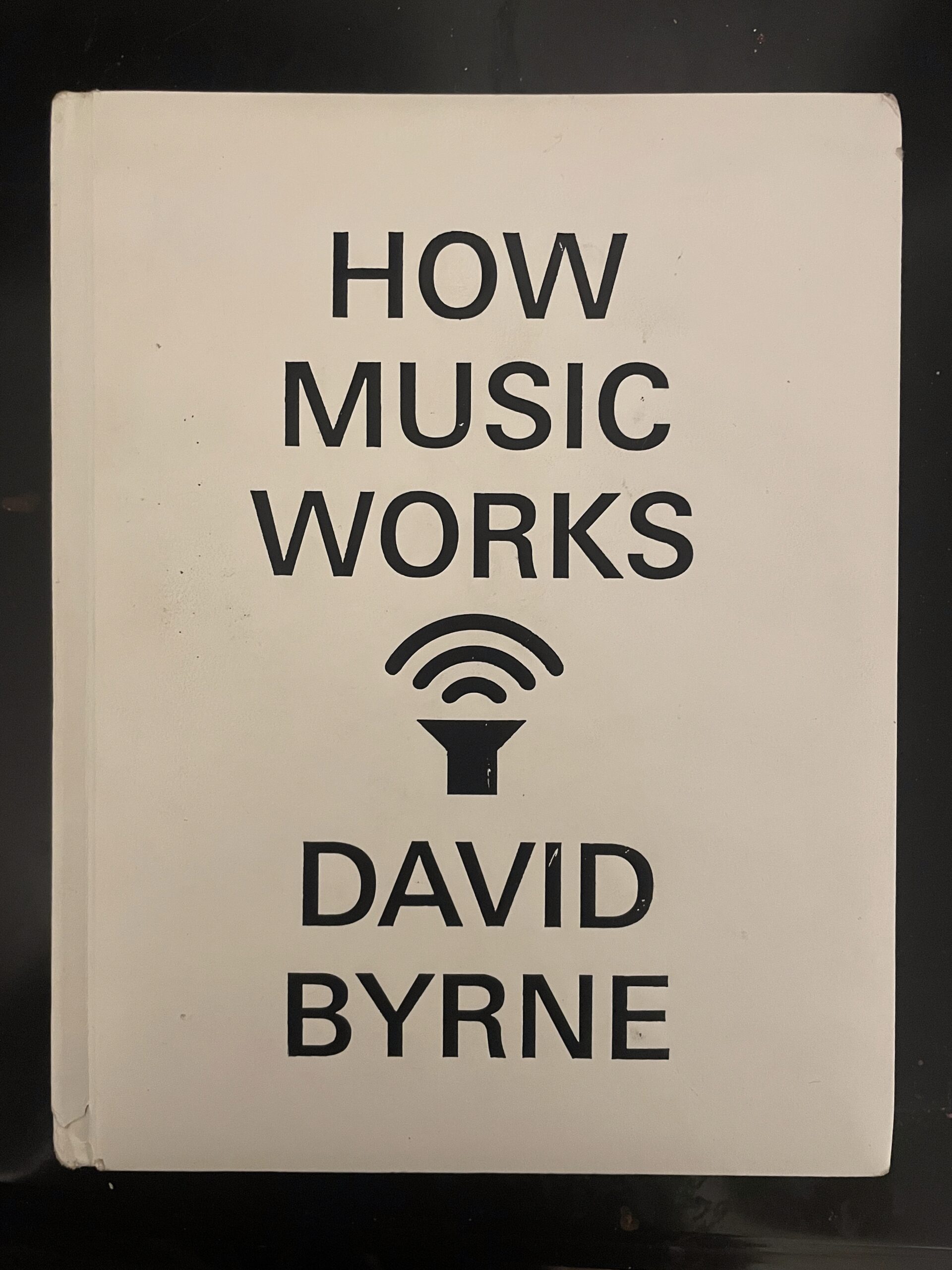
A book by a man who is self-diagnosed with Autism, which, while that doesn’t describe me, I’ve been wondering about myself lately. A book that is not memoir, but features plenty of cool stories about CBGB, Brian Eno, and Talking Heads. A book that isn’t a science book, but features plenty of science. A book that doesn’t demand you know what a “scale” is, but it’s helpful if you can at least picture a piano (maybe look up “what’s a major scale” and “how to build a chord” on YouTube before reading, or while reading). A book published in 2012 by McSweeney’s, and is top tier McSweeney’s, not kinda-twee-and-annoying McSweeney’s1. I’m talking, of course, about How Music Works by David Byrne.
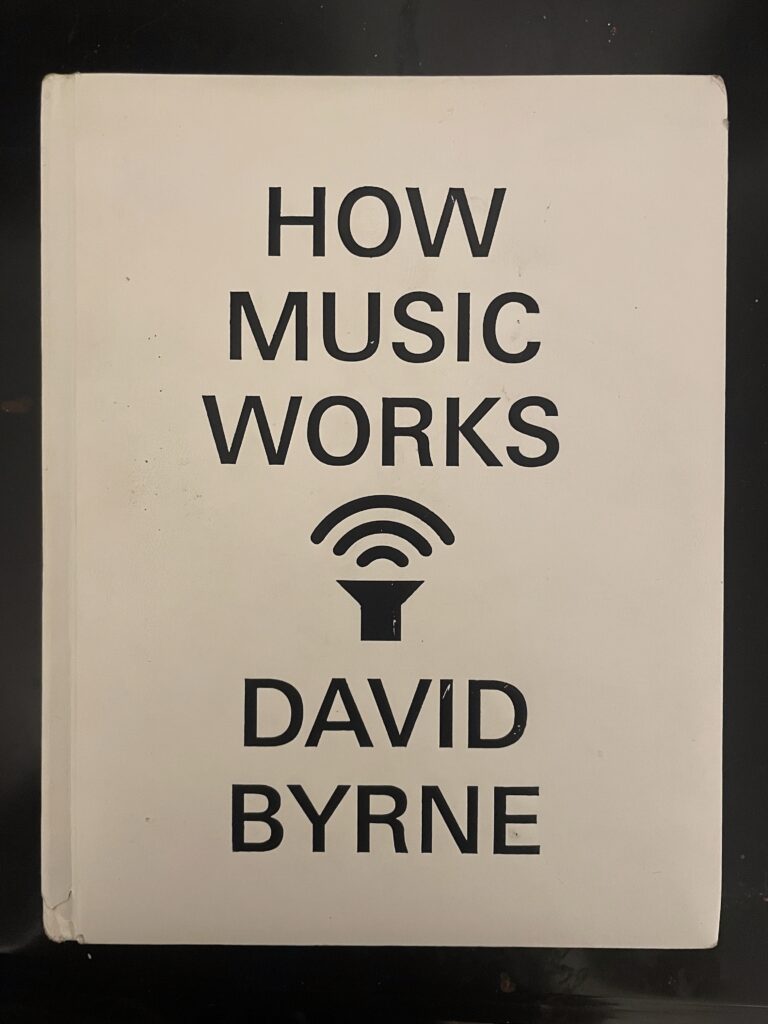
How Music Works by David Byrne: what do I want out of music writing? It feels like a lot of music journalism is contextualizing an album/artist in a specific moment in time and culture, or talking about what the music means—but not on a technical level. Being someone who doesn’t super get the zeitgeist, that’s never quite been my thing. The way I hear music is different from other people, and I don’t say that to brag. I’m just a trained musician, fluent in multiple styles and conversational in many more. I don’t really listen for lyrics, I listen for chords and rhythms and textures and drum beats that surprise me. There’s a mild synesthesia to my listening: the keys of C and G are red, E-flat is sky blue, E and B are seafoam green, D is something like yellow. I sometimes get stuck in musical ruts because I crave vibe so much when putting on a record that it’s often easier to simply go with what I know. All of this onanism in the intro paragraph is leading to the question: does David Byrne, armed with a grandiose title, write about music in a way that hits my brain? Yes.
There’s a heavy emphasis on the science of acoustics—how a space like CBGB or an opera house or symphony hall contributes to music. That stuff affects how composers write, how musicians play, and how audience reacts. Recording technology—such a new thing! Barely more than a century old!—changes what we even perceive of as music. Did you know that opera singers and classical string players didn’t used to use so much vibrato? Did you know that the idea of “the recorded version is the settled version of the song” is a super new idea?
There’s a lot about how wide the world of music is. I had no idea David Byrne was such a fan of Brazilian music. Once you hear it, how can you not be, I guess. There’s so much music in the world. So much I haven’t engaged with. This book inspired me again to check out Chicago’s Ragamala—wonder when that’ll actually happen for me? One of these years.
Talking Heads is a band I think is cool, but one I’ve barely listened to. I don’t know any gossip or drama, and I wasn’t reading critically when reading David’s personal stories of collaborating with this person or that person. He mentions his kids a few times, but no wife, so I looked up how his marriage was going, and wish I hadn’t. It’s my desire to engage with this book as a piece about music, not worry about whether or not a dude who can’t read social cues has pissed off some other dudes in the past. For many reasons, selfish and unselfish, I am sympathetic to people who can’t read social cues. Point of all this is, I went into this book cold, and found it to be a rewarding experience.
LINKS!
Something to listen to while you browse? Should we listen to some Talking Heads? Really, my most salient memory of listening to them is someone putting on a vinyl at one of the poetry reading ragers we threw back in college. Always a band I’ve liked the idea of more than actually listened to. Something that’s changing after reading this book.
- This week in ICE: Federal Agents Kill Again; Gunmen Still At Large by Albert Burneko and How Do You Justify Abducting A Child by Justin Ellis in Defector, I grew up with Alex Pretti by Kristen Radtke in The Verge, Two women, detained by ICE, say they helped agent having seizure by Sofia Barnett in Minnesota Star Tribune, ICE 101 — How Trump changed ICE and CBP into a fascist secret police by Garret Graff (yes the author acknowledges both instutitions are “fatally flawed products of the post-9/11 War on Terror), ‘How many more Americans need to die?’ Minneapolis mayor asks after fed fatally shot man by Tiffany Walden and How are Illinois politicians responding to escalating aggression by immigration agents in Minnesota by Tonia Hill in The Triibe, Shouldering Sanctuary documents Chicago under siege by Alec Karam and Fuck ICE: The Quick and the Dead (1995), Forty Guns (1957), and other physically and emotionally violent films by Kat Sachs in Chicago Reader, Leaders Share Tips On How Chicagoans Can Best Support Immigrants At Block Club Event by Christine Schmidt, Meet The Immigrant Seamstress Who Has Made Banners For United Center Legends For 40 Years by Maxwell Evans, Chicago Nurses Honor Alex Pretti At Vigil, Outraged Over Minneapolis Nurse’s Killing by Leigh Giangreco, Woman Shot 5 Times By Border Patrol Asks Judge To Unseal Body Cam Footage by Melody Mercado, ‘Abolish ICE’ Submitted 9,200 Times For Chicago Snowplow Naming Contest, Records Show by Leen Yassine (hey, proud to be one of 9,200 here) in Block Club
- Really incredible stuff about copywriting from Casey Taylor at Weed Church
- Maggie Queeney reflects on a decade building the Poetry Foundation’s adult education programs by Jasmine Barnes in Chicago Reader
- Giving this one its own slot because I think it highlights a key difference. I hope this changes by Friday morning, but almost no NBA player has called to “abolish ICE.” Not that I need to. But “Disgusted” Breanna Stewart Holds Up “Abolish ICE” Sign Before Unrivaled Game, as Tom Ley in Defector notes, and that is different than what NBA players are doing. A pull quote, because Defector is subscription-based (but worth it!): “[Steve] Kerr and [Anthony] Edwards were more or less in line with the National Basketball Players Association, which on Sunday released a statement declaring that NBA players can “no longer remain silent,” while not specifying what sort of noise they plan to make…One good step to breaking the silence might be at least identifying who killed Renee Good and Alex Pretti. Aside from Stewart, Haliburton, and former NBA hooper Isaiah Thomas, it feels like many players in the league are a little out of practice. Athletes will surely have many more opportunities to make their feelings known in the coming weeks and month, but right now it feels like we’re a long way off from where we were in 2020.” That last part is what troubles me.
- Finally, there’s a new Kicking Your Ass! Go check out Adrian’s very good poetry journal, of which he is the editor-in-chief. The editor-in-chief of Kicking Your Ass.
What’re you still doing here? Want more Talking Heads?
If you work in the service industry, may you clean up in tips this weekend. In the spirit of David Byrne, get out there and listen to a style of music you’ve never listened to before. If you control the aux chord/bluetooth speaker/whatever at your job? Put on something, uh, howtoputthis, uh, difficult for normies. We all need our brains expanded.
Sorry you got an email,
Chris
- I’ve never really heard anyone complain about McSweeney’s, and I certainly have a generally overall positive view of it. With some distance from their heyday—or at least what I perceive as their heyday—I can see how some offerings and aesthetics are kinda Millennial Cringe. I’m not trying to disparage anyone, here. More like, there was a time when I would pick up anything from McSweeney’s blind. That’s not quite how I feel anymore. Still, it’s a wonderful, valuable institution. ↩︎