“sea & salty salt mingling / on my lips oh the sting / is so good when you / love the air that sends it” – Summer Farah, “POEM FOR AKKA BEFORE SETTLERS TORCH PALESTINIAN HOMES, MAY 2021”
There isn’t a ton of method to selecting what books I read for this blog, but there is a lot of thought. Three main factors go into the schedule-making: 1) is this a book on my shelf that I haven’t read yet? 2) is this a book that might meaningfully inform whatever writing project I’m working on now? and 3) what month is it? I can get pretty in my head about it, trying to be intentional, trying to have the schedule have some flow, and trying, most of all, to have fun. Reading is fun.
A cool thing that happened near the end of 2025 was a couple of people reached out asking me to review books for them. Enthusiastic “yes”es followed—it is exciting that anyone thinks this blog is worth using to promote a book. Problem was, 2025 was an incredibly difficult year for me personally, and 2026 kinda got off to a rocky start, too. I don’t feel like going into details, but it’s been stressful times over here. There’s a light at the end of the tunnel, now. When that light started peeking in, though, I realized I had totally forgotten those two requests.
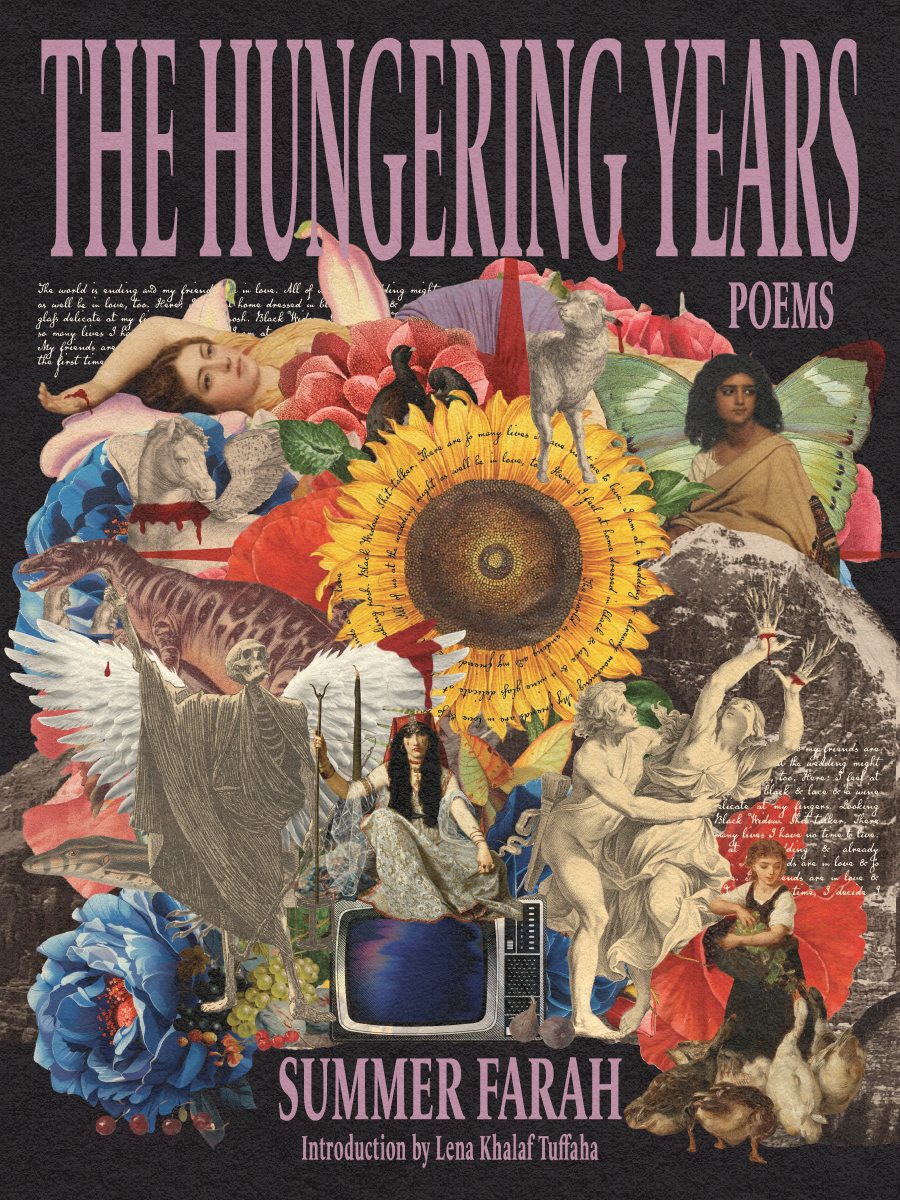
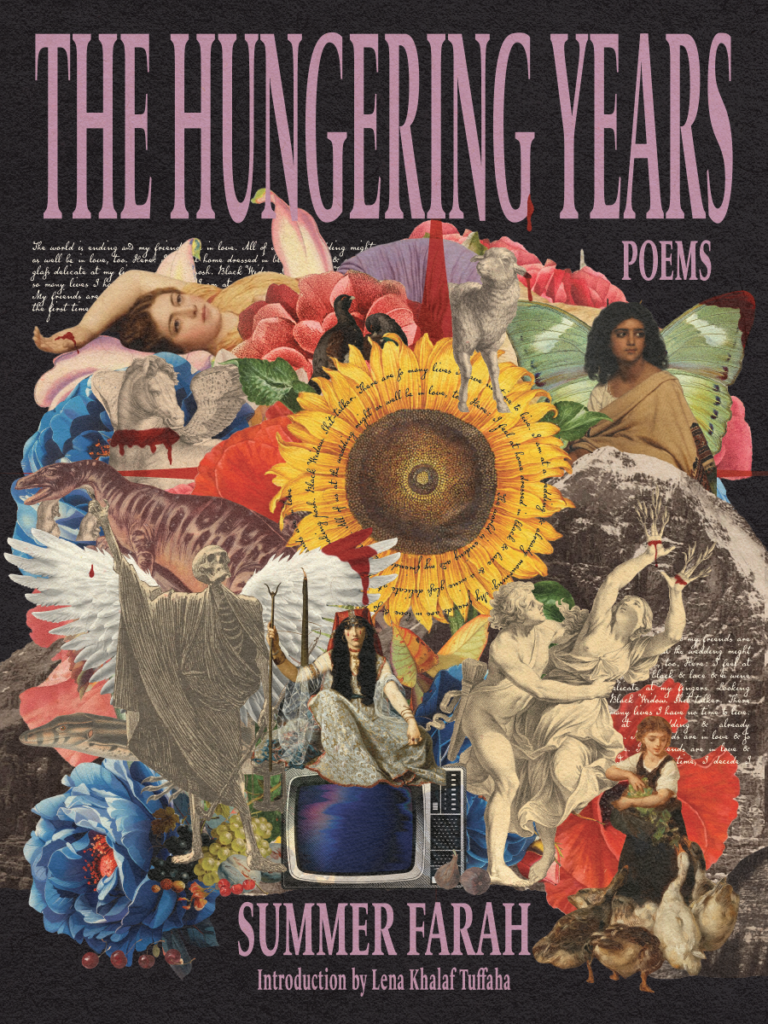
So that’s what this blog is doing this week (and last!), honoring those requests. With deep, deep apologies for my lateness. Up first, let’s look at the gorgeous and vibrant The Hungering Years by Summer Farah, published by Host Publications in February 2026. You can buy it direct from Host or at Asterism. Like last week, I’m going to try a sort of question-and-answer review format.
What is this book?
Poems. No experimenting with form or tossed-in visual art. Just poems, although, of course, saying “just” poems isn’t right at all. These poems are lively and vibrant and anxious and elegiac and surprising and dealing with lineage and beautiful and all the things you want poems to be. These poems are also written by a Palestinian-American, who is consciously writing during the years of Israel’s horrific genocide in Gaza.
Ok, so is this book, like, all sad?
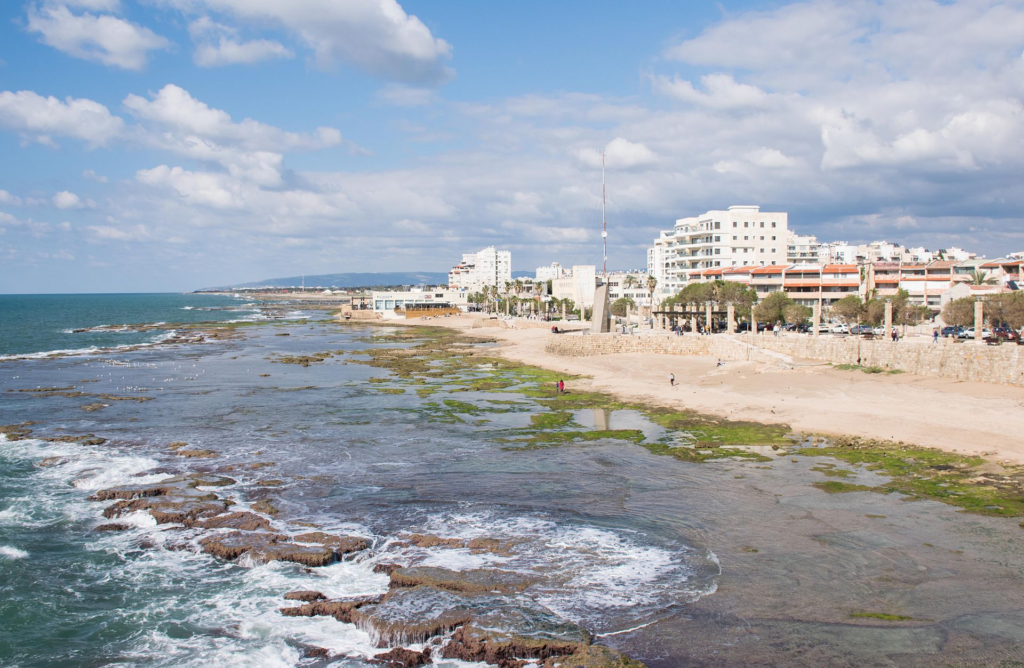
These poems are unflinching about the violence and harm caused by Israel’s colonial project. I had to look up Akka—you know, from the title of the poem quoted in the epigraph?—and found it that it’s now called Acre. Akka was its Arabic name. There is that unique longing that comes from being born a member of a diaspora and then returning to your family’s homeland. There is anxiety in the addresses to Etel Adnan.
_DSC_0437_(13318683425).jpg)
But is this book, like, sad all the time? Absolutely not. This is one of the most electric and alive and excited books of poetry I’ve read all year. There are incredibly moving love poems in here. This is a book that features the full band of human experience. Tragedy plays in that ensemble, but tragedy isn’t taking all the solos. There is so much music in these poems.
Does it feel any less authentic, coming from a poet born in the U.S. as opposed to spending their whole life in Palestine?
First of all, that’s a jagoff question. You do not have to be directly, every-day-of-your-life affected by political violence to be affected by political violence. You can be born into a diaspora—i.e., away from the homeland of your family—and still feel achingly connected to that land and culture. I’ve heard my brother-in-law talk about trips to various parts of Africa being transformative for him. I’ve read enough literature by immigrants to know this is a common experience. I can’t exactly say I had this aching for British soil when I studied abroad in Manchester, but I get the phenomenon.
And again, all of these poems to Etel Adnan really carry some weight. The introduction, from Lena Khalaf Tuffaha, points out the similarities between Adnan and Farah. “Like Adnan, Farah belongs to two worlds. She organizes with the Radius of Arab American Writers (RAWI), Etel Adnan served as its president. They both lived in Berkeley, California. Both writers are Arab Americans, Adnan tracing her lineage to Syria and Lebanon, or more accurately, to Damascus and Beirut, and Farah to Nazareth, Palestine. Their work circles their cities of origin, theongoing colonial violence their places of origin endure, and languages andmemories that form their inheritance.” Summer’s acknowledgements page thanks Adnan, “…the ultimate ancestor, for the work you left us, for the work we are inspired towards because of it.” I’m a sucker for engaging with literary lineage, and Farah does so to great affect here. I didn’t really know about Etel Adnan—I knew the name, but none of her work. She seems fascinating. Poet, visual artist, thinker.
Would you compare The Hungering Years to Fady Joudah’s […]?
In the sense that they are both books that truly celebrate living in spite of genocide, in spite of political persecution, yes. You could absolutely put these books on a syllabus together and get some great discussion out of them. Also both books are absolutely a blast to read, even when dealing with heavy subject material. These are two capital-P Poets we are talking about.
.jpg)
Is the title instructive?
Yes, but it is not literal. These poems do hunger after something—meaning, maybe? Being a good person or doing the right thing? These poems are also sensuous. They’re somewhat confessional. They’re bursting with song. These poems hunger in the way that all poets should hunger when they write. Verse is different from prose, and even though there are a lot of prose poems here, these are written with such unbelievable care for language.

Did you have fun reading the book?
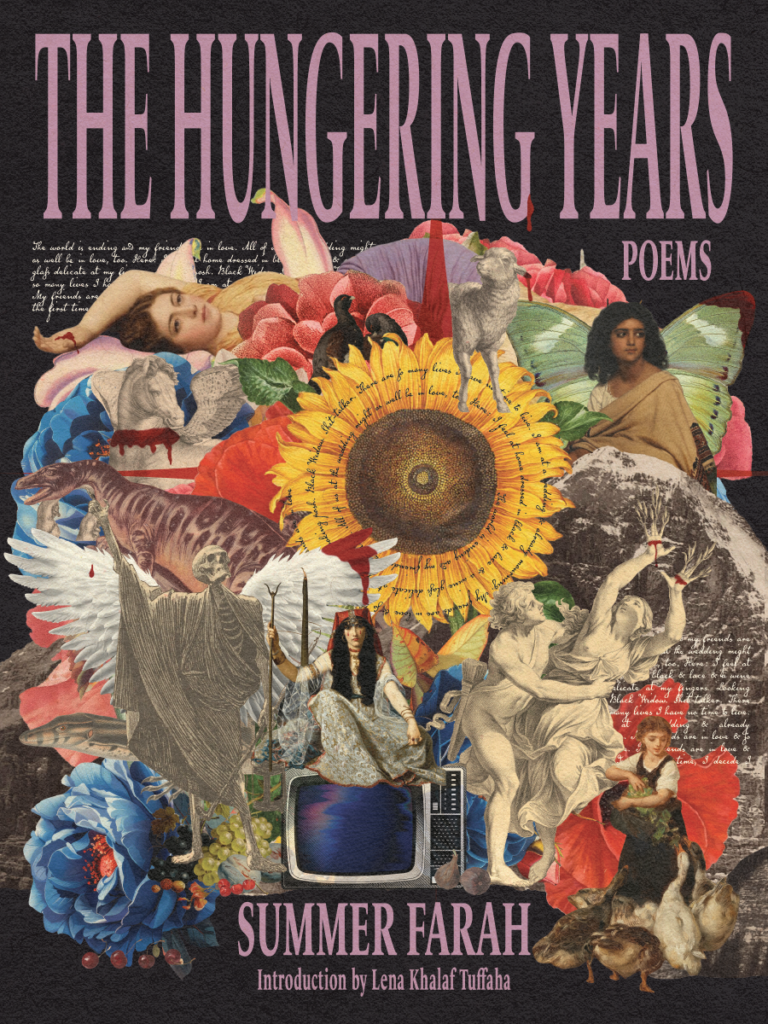
I had so much fun reading this book. Again, these poems feel so vibrant. I’m deeply grateful to Laura Villareal for asking me to review this book. I am going to buy a copy for myself and revisit it. You should get a copy, too. Here, memorize the cover, in case you’re ever in a cool bookstore.
Real quick before we go—are all of the addresses to Etel Adnan just about how vapid and shallow and casually bloodthirsty USian culture is?
No. There’s always longing for artistic meaning, a sense of wanting to be good enough to meet the moment. “You change me: the way I consider the fog, my attention to death, a desire for the surreal right where I stand. I have loved so many prophetic women. At night, we dream any tomorrow that could mundanely be.” Farah writes in “I TELL ETEL ADNAN ABOUT MITSKI.” Still again, “I TELL ETEL ADNAN ABOUT THE LEGEND OF ZELDA opens with “When you describe the empires that rise and fall under the watch of the moon, is there no ounce of fear? I am frozen by one who is not ashamed of their inability to move; I am ashamed by my inability to move. There are so many excuses to not enjoy the water in this feud against the moon.” There isn’t a touch of irony poisoning in these poems. It’s more like, what I can do as an artist with my moment? Honestly, what can any of us artists do, in a time like this? Etel Adnan met her historical moment as much as can be reasonably asked for; two years after her death, October 7th happens. A few years after that, Donald Trump starts a war in Iran, and Israel starts attacking Lebanon for reasons that only make since if you’re a sick and broken person. What can an artist do? Well, one thing the artist can do is write The Hungering Years, a book that rebukes the genocidaires by being so full of life.
Sorry you got an email, and Free Palestine,
Chris