
“Punk often desired to convey a message or tell a story, like folk and blues.” – George Hurchalla, ‘Going Underground: American Punk 1979-1989’
Everyone wants to change the world, but people get bored easily. The songs are two minutes, and the music industry’s eagerness to declare a trend dead doesn’t even take that long. The Sex Pistols were a cynical creation of capitalism, and anyone who says real punk died before 1980 was always a poseur. The truth is, punk’s not dead, but the old generation always has to proclaim it dead and the new generation has to yell punk’s not dead and once you’re able to see this pattern repeat? You realize that whatever proclamations people are making, you are still a weirdo who doesn’t fit and who people don’t really get.
For me, it’s another instance of paraphrasing my good friend Hannah Cohen: punk is how I engage with the world.
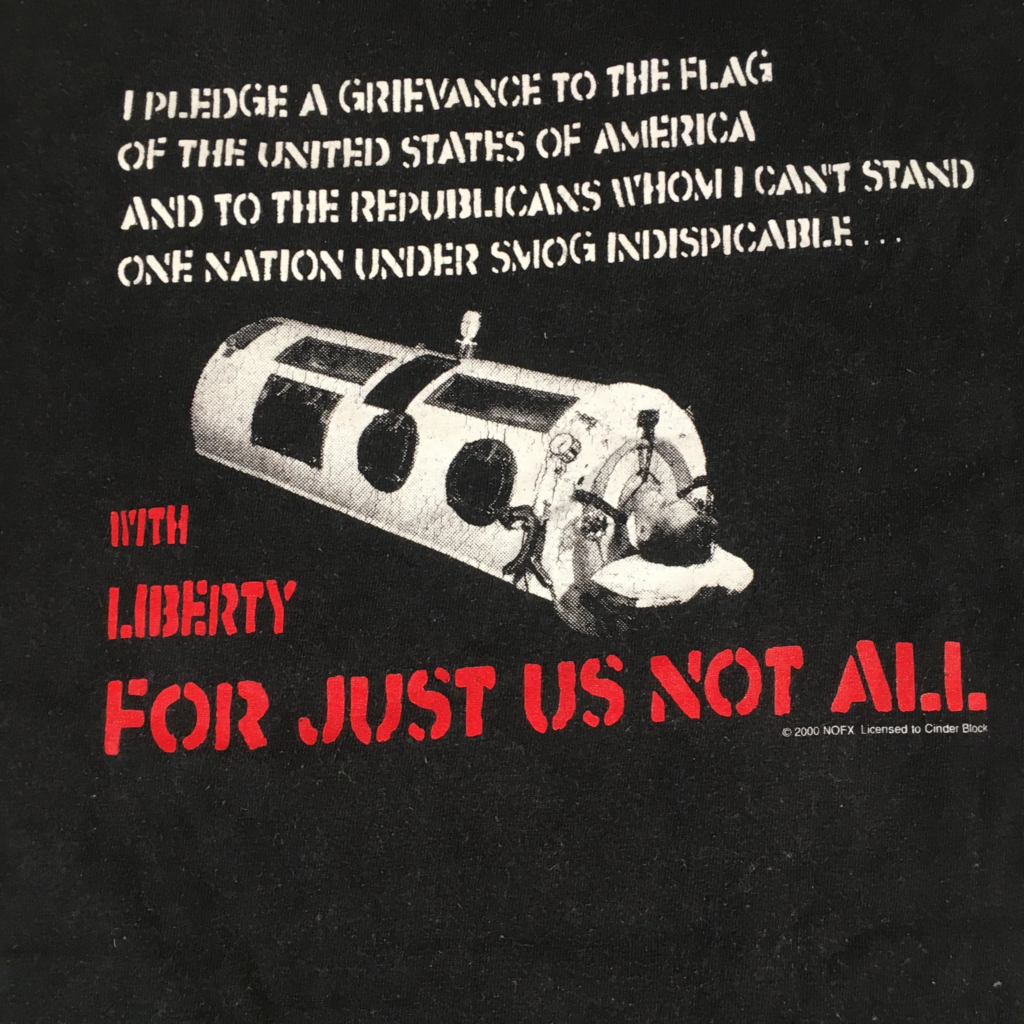
There’s a bridge-blower’s attitude at work, here. Punk means always being able to say “fuck this, I’m not part of this.” That’s how I felt at age 15, in the lead up to the Iraq War, the specter of having to mail in my selective service card looming. That’s how I feel now, as “being willing to use GenAI” becomes a minimum requirement for having a corporate job. Speaking of jobs, I’ve honestly never felt like I belonged anywhere. In service jobs, I worried people could smell the stink of “doctor’s son, private college” on me. In corporate jobs, I couldn’t make myself care about promotions or overlook the fact that a company motto (“make our website a daily habit”) sounded like a drug dealer. I tried really hard to fit into corporate stuff—I write a great email, I say yes to things, I am generally willing to participate in team-building activities—but then I realized that none of that shit saves you from layoffs. Plus, becoming a dad really makes it hard to care about corporate culture. Shit, when Mallory got pregnant, I couldn’t even make myself excited for team happy hours, and I was a drunk drunk.

Punk is a place where anyone can belong. Provided they’re not a huge piece of shit or a Nazi1. You can be Black, Latine, Asian, Indigenous, Irish, gay, trans, a cross-dresser, a quadruple amputee, a cartoon goth, a skater, Christian, or whatever else. You just can’t be fake, and you have to be nice to people. Even if you’re throwing bows at each other in the pit.
The pit, somewhat famously, is one of the first places you learn about punk’s altruism. Everywhere I’ve been, people help each other out in the pit. I know it’s not the same with every scene, I know there are some real looking for a fight motherfuckers out there. Just wasn’t the case where I’ve been, though. In fact, the Murfreesboro scene really started to alienate me when it shifted to metal/djent, because I viewed slam dancing as a way to selfishly colonize the pit. No one can stand within 10 feet of the band if someone’s windmilling their fists and blindly karate kicking. That’s individualistic. A bunch of people pogoing and pushing one another though? That’s camaraderie.
There has to be a mutual aid component to punk. You have to be agitating for the revolution. Food Not Bombs is punk. As DOA said, TALK-ACTION=0. The Clash going to Jamaica was a mixed bag, but “Rock Against Racism” was and is a necessary platitude. No Eric Clapton-style xenophobia, no hair metal-style hedonism (read: no raping minors and then bragging about it in song).
Ever since reading it, I can’t stop thinking about Michelle Cruz Gonzales and the story of Spitboy not only using thrifted tees to screen print their merch on, but being so committed to screen printing that they’d even do it on the road. Also the Spitboy story of someone telling them to “shut up and play or spread your legs” and Michelle bounding over the drum set, looking to fight whomever was in the crowd, people holding her and the rest of the band back, the band all crying from rage, everyone working to kick that asshole out. Nothing good about that happening at a gig, but a willingness to fight has to be a necessary response or else you’ll be walked all over for the rest of your life (by this defination, Democrats are the least punk rock people to ever exist).
Again, punk is not perfect. No one lives up to this bullshit. Still, I like the vague creed. I grew up Christian.
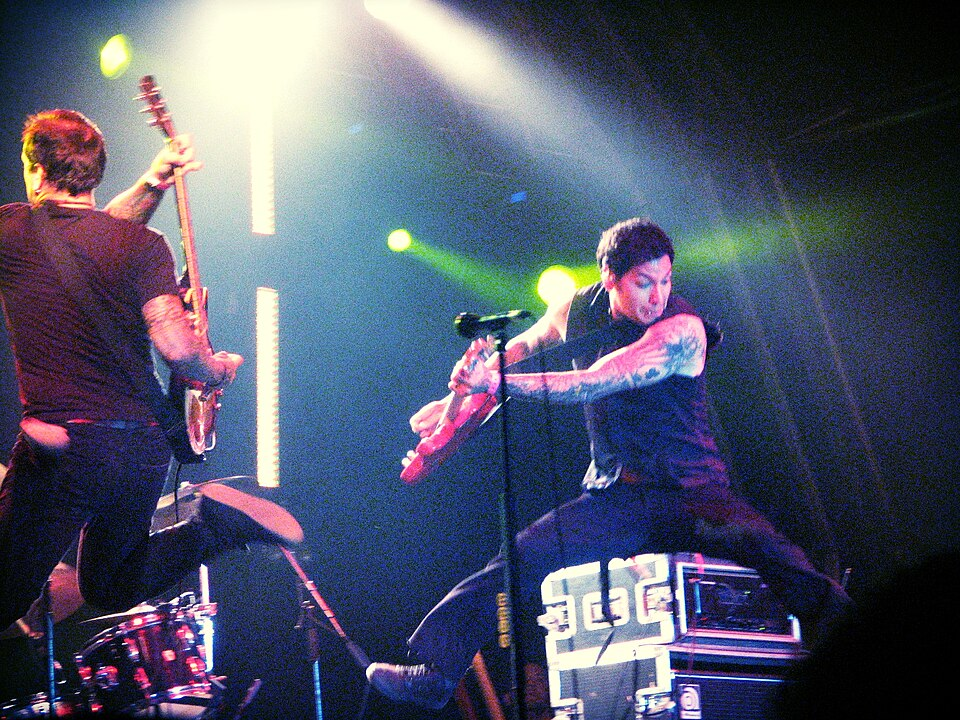

One thing I’ve been introduced to since growing out of being in the scene that really reminds me of punk is small press literature. Particularly small press poetry. I remember sitting in workshop one time and Josh saying “sure, in fiction, you can have a career, but poetry, you don’t have to play the capitalist game.” Josh didn’t talk about anti-capitalism much. He did, however, make us make zines (excuse me, chapbooks) for our final every semester. He did make us buy 8-10 small press books every semester. He did make a tour documentary about Califone.
One time, I described my love for small presses to Brendan, telling him I didn’t want to even think about an agent or Big Five publishing until I had a few small press books. I probably said something about artistic integrity, people doing it for the love of the game, more or less everything I just wrote. “You’re describing punk rock,” he said.
I do happen to think the small press scene is punk rock. Another definition of punk, though, is accidentally booking a show at a Nazi bar and opening with a cover of “Nazi Punks Fuck Off.”
Here’s something Hanif Abdurraqib said in Reaghan Buchanan’s Secret History Of Black Punk zine.
“I think there are as many ways to define punk as there are people who have immersed themselves in it, or people who have, for a moment, found themselves looking for community among a sea of people who, perhaps, did not look like them. And so I imagine punk as an internal engine first. The thing that blooms out of being on the outskirts of the outskirts. Everyone imagines themselves as harder to understand than they actually are, and I always felt like punk was a way for me to perform that in a way that wasn’t as absurd as I felt on the inside.” – Hanif Abdurraqib, interviewed for ‘The Secret History Of Black Punk” by Raegan Buchanan
Let’s give the last word to George Hurchalla. Here’s an amazingly prophetic passage:
“We all learned to live with the nuclear threat, and shunted it away to the dark recess of our minds. I had a violent hatred of Reagan as a teenager, partly due to a teenager’s overblown feelings about everything but mostly to do with a reaction to the insanity, the collection delusion, that he was leading the country into. The mindlessness of people in backing the gutting of our social services and education systems in favor of tax cuts, of supporting huge military buildups and violent intervention all over the world in the name of anti-communism, running up huge government deficits, selling off the future of our country so Wall Street could make a quick buck…all clouded behind a veneer of ‘rugged individualism’ and ‘the American way.’ I couldn’t stand to see a nation of people buy into something so transparent, and this feeling all targeted itself personally on Ronald Reagan. (My teenage rage and all of these evils have since been replicated, with terrorism substituting for communism as the new bogeyman, so there apparently was nothing overblown about my sentiments then.) My feelings were tied to a sense of the country veering off in a direction it could never return from. In that future, there could never be a chance of my beliefs ever being treated as anything but part of the lunatic fringe. The music I liked so much would be marginalized more than ever. This was the kind of vague consciousness that gave rise to the fervency of the DIY spirit. Ironically it was people most disenfranchised with the supposed new way of Reagan’s rugged individualism that were the only ones in the country really practicing it.
“Knowing that no one would ever put out our records for us, no managers would set up tours for us, no night clubs would open their doors to us, no radio stations would play our music, and that the situation would only get worse, a generation of punks took the steps necessary to have our voices heard the best we could. We created our own record labels, even if it was just to record the music of your own band and no one else. We built an underground network of sympathetic people and places that bands could play, constantly improvising to keep old venues open or create new ones. We pasted together fanzines and found a myriad of different ways to get free access to copiers…We did radio shows whenever we could find a slot…We did this ‘lest there not be anything ever to do again.'”
Sorry you got an email,
Chris