“The writer’s role is to menace the public’s conscience. He must have a position, a point of view. He must see the arts as a vehicle of social criticism and he must focus on the issues of his time.” – Rod Serling
An emerging theme of this blog and the Lazy & Entitled Podcast this year is “get outside and do stuff in the real world.” I’d sorta set the reading list to have a bunch of music books, which led to reading George Hurchalla’s recounting of DIY punk in the 80s and Michelle Cruz Gonzales’ stories of Spitboy screenprinting their own shirts on tour. Couple that with the daily onslaught of how tech oligarchs are trying to take away our free will with algorithms and LLMs, on top of ICE’s invasion of Chicago in fall 2025 and intensification of operations in Minneapolis, and well? I am big believer in the simple power of talking to people face-to-face. It is with this prologue that I want to tell you about this super cool poetry reading I went to on Friday.
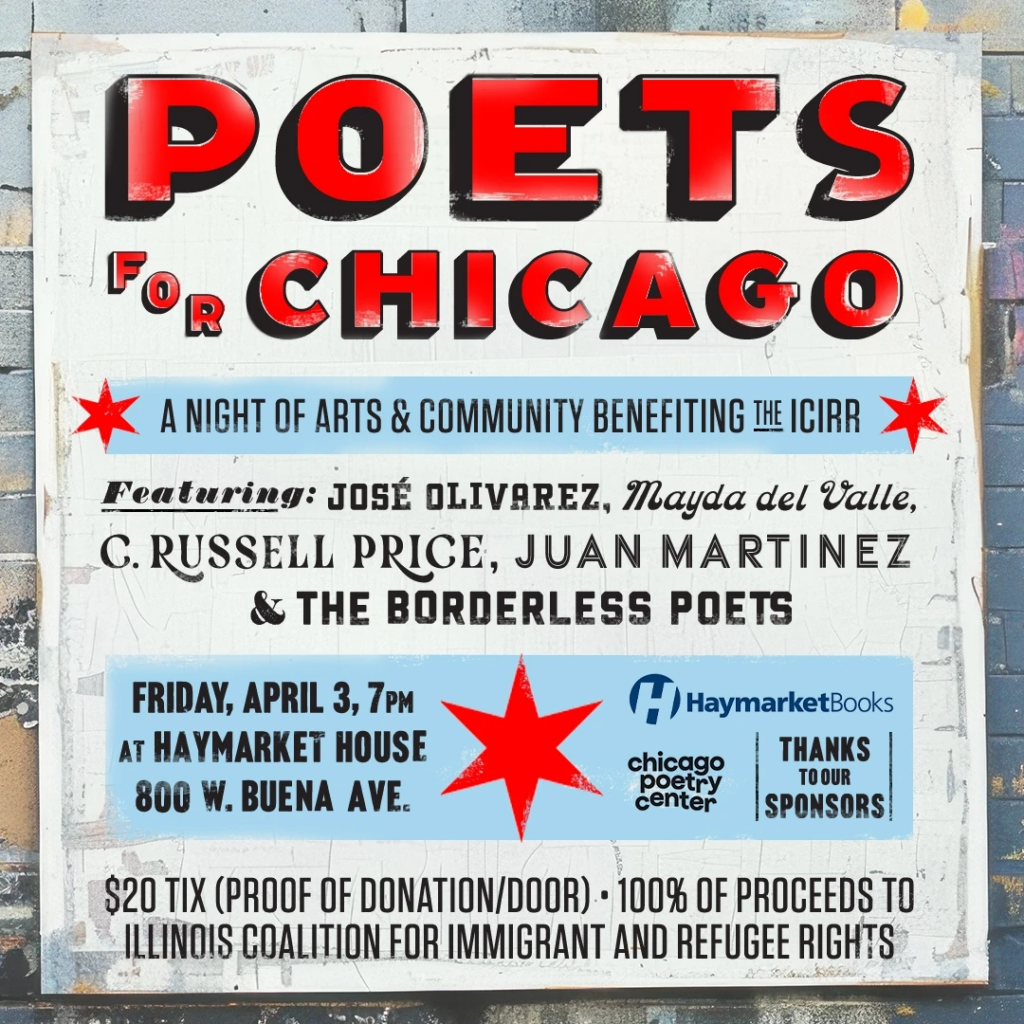
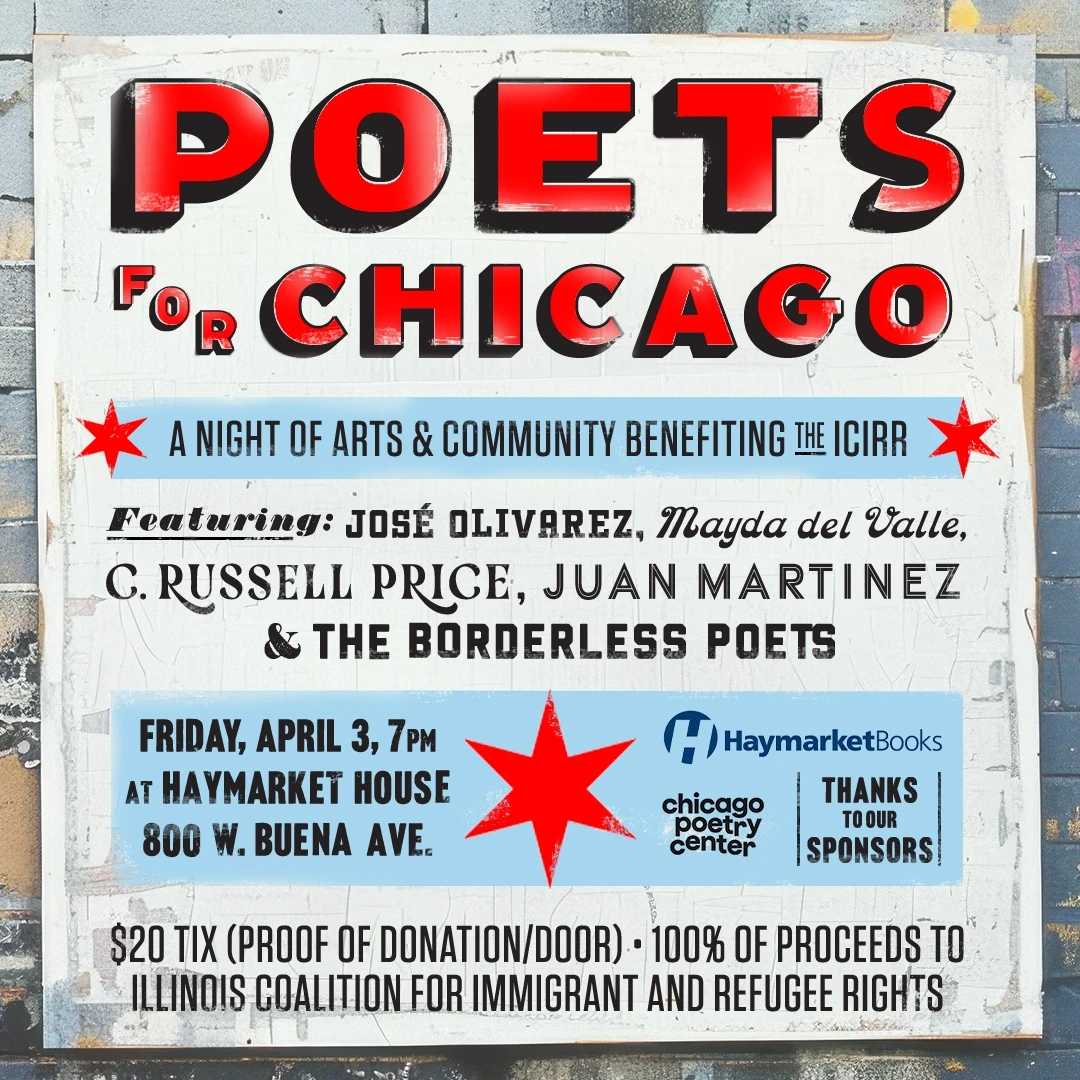
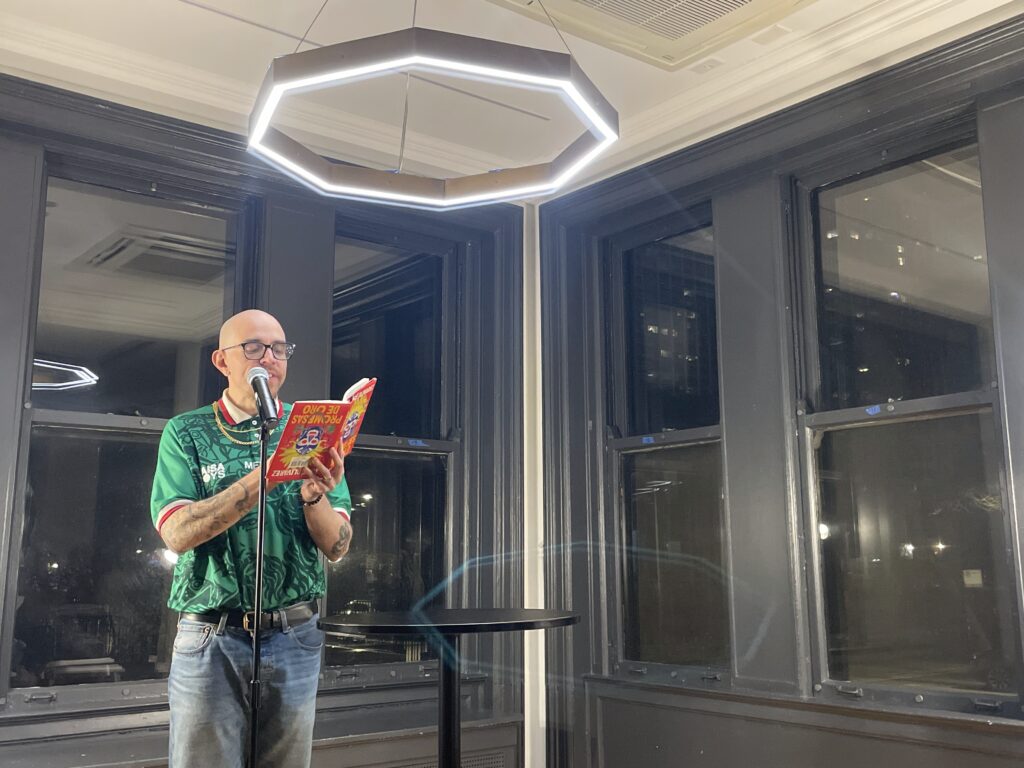
Lit For Chicago was masterminded by a few different Chicago-based reading series, but especially my friend, Ben Niespodziany, and Cool Guy I Believe I Have Now Met Twice, Kenyatta Rogers. The readers were Chicago Poet Laureate Mayda del Valle, Eldritch horror genius and my former neighbor-but-we-only-found-out-after-we-both-moved Juan Martinez, earth-shattering collective The Borderless Poets, Poet Who Instantly Joined My Personal Pantheon Of Best Readers C. Russell Price, and José Olivarez, who longtime readers will know is one of my absolute favorites.
Absolutely stacked lineup, and all you had to do was donate $20 to ICIRR, or the Illinois Coalition For Immigrant and Refugee Rights.
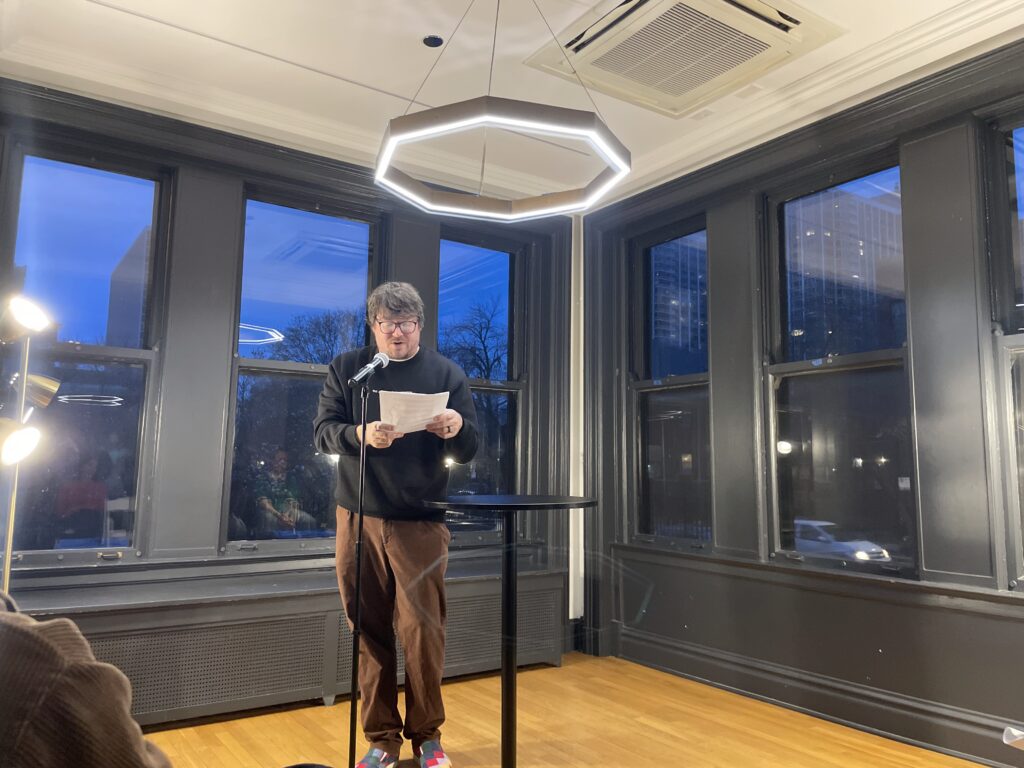
So yes, perhaps you could call this a “benefit show,” or wonder if it falls in the category of “artsy special event where people congratulate themselves for being cultured and having spare change to toss at a cause,” but I didn’t get either of those vibes from this reading. For one, there was an extreme lack of pretension. Maybe it’s because the vast majority of people don’t care about poetry, but I simply never get a whiff of clout-chasing at poetry readings. As Spencer said, compliments don’t pay bills (and no one’s getting laid)—people are there because they also loved Promises Of Gold or South Side Girl’s Guide To Love & Sex. For another thing, there was a palpable sense that everyone in the room had been affected in some way by Operation Midway Blitz. If your neighborhood didn’t have people abducted or teargas deployed in it, well, then you probably live in Streeterville. Point is, those gathered were all veterans of the major 2025 battle with ICE. We mourned those taken, neighbors kidnapped, people gassed, people shot. That night, though? That night, we were there to hear some cathartic poetry, to yell FUCK ICE, and to celebrate the fact that the city had fought back last fall and would fight back again. To celebrate the humanity of our neighbors, the incredible poetry that people in this city produce. Gathering in the name of antifascism on Good Friday.
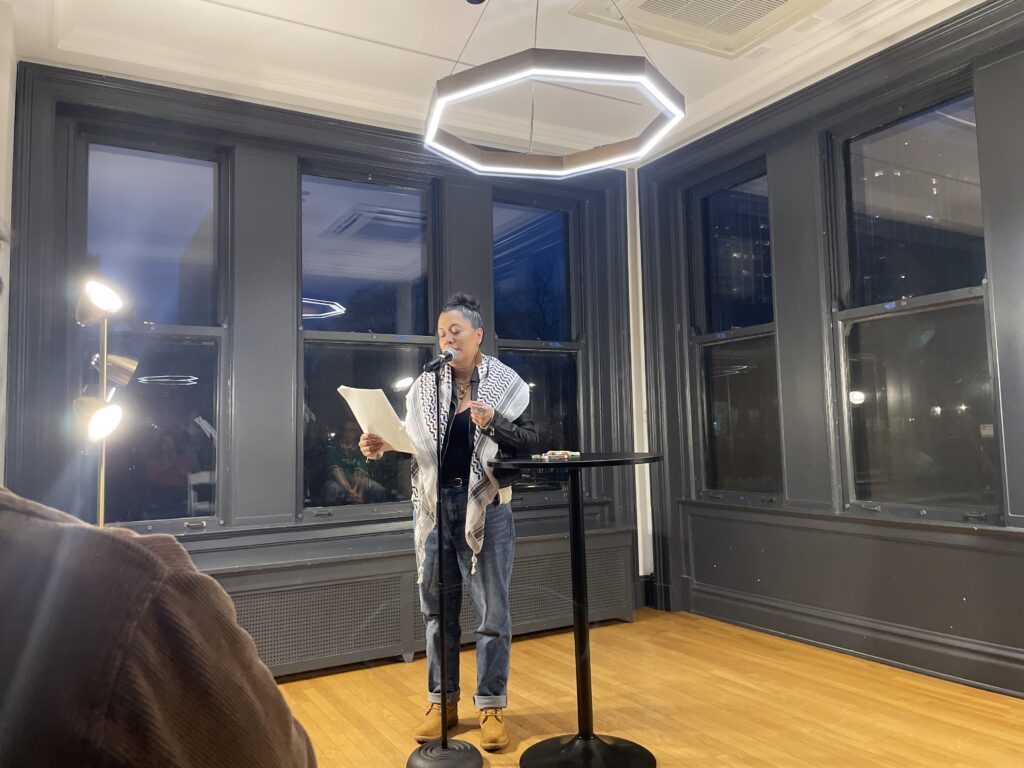
Anarchists and otherwise on-the-ground activists stress the importance of showing up, reminding each other that we’ve got our backs. This atmosphere was not self-congratulatory, it was affirming a community. And hey, we DID put a lot of cash in ICIRR’s coffers.
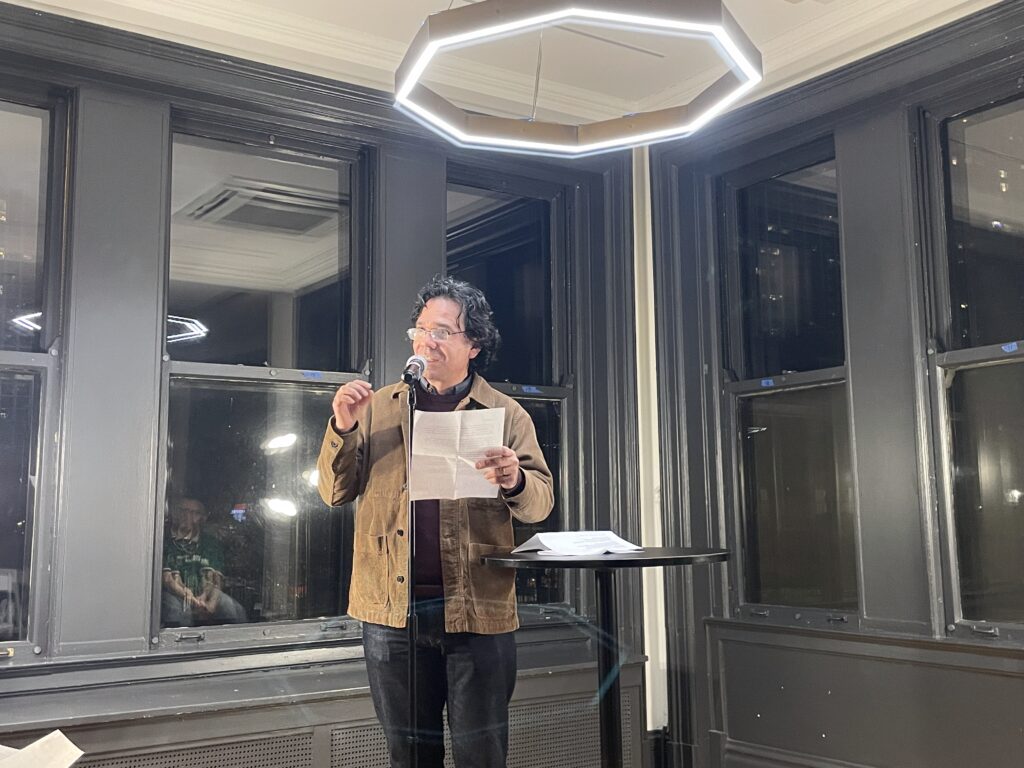
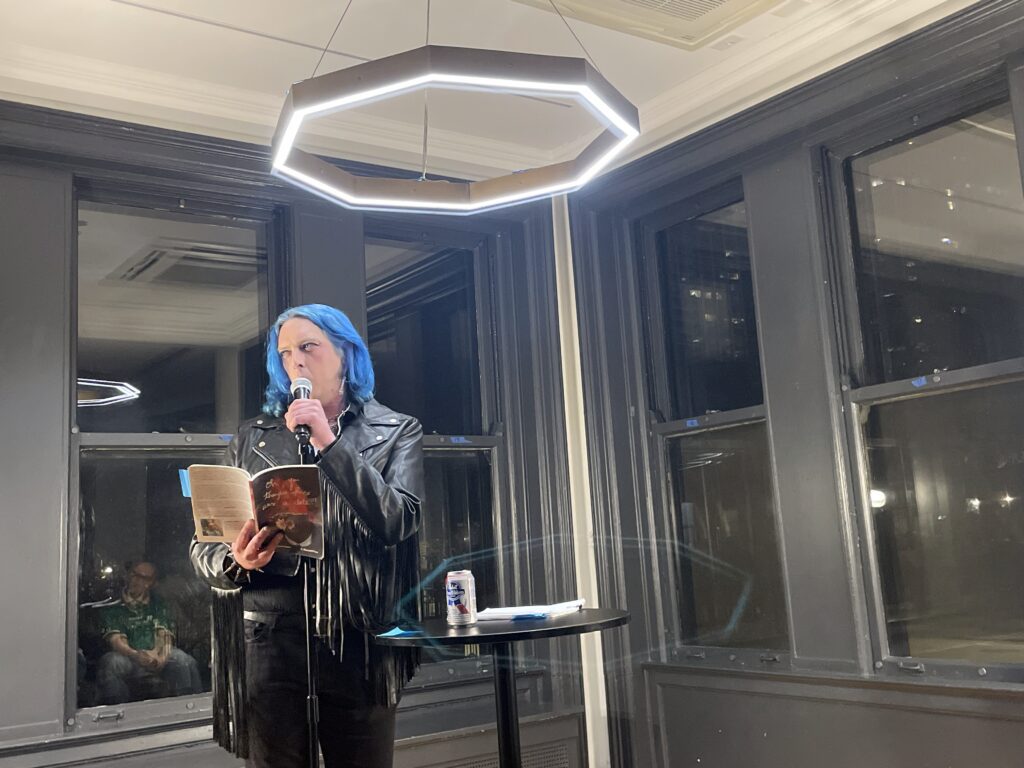
I should point out, too, that the poetry met the moment. Mayda read these long poems full of love, loss, sorrow, power, being treated as a second-class citizen, trying to have a child, ways you think your life will go—the fullness of human experience in emotionally gripping long lyrics. Juan, who would claim that he is not a poet, read three great “poem-shaped things.” He closed with a crowd-pleasing “shit my four-year-old says” poem, because we can be pissed off at everything happening in this stupid country while still being overjoyed at adorable children. C. Russell Price had this ass-kicking, take-no-shit-or-prisoners demeanor that lit the room on fire. José has such a casual and casually funny style, but his poems are full of knives and bloodied knuckles. Whatever I was thinking these readers were going to be like, they were. And more.
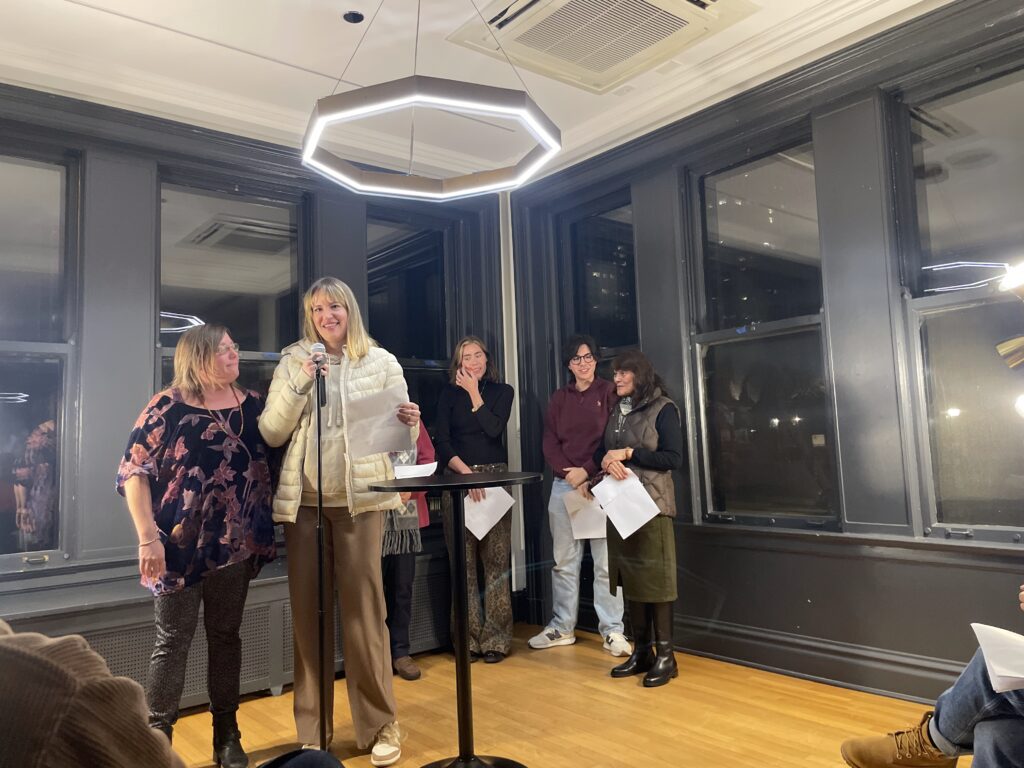
What I could not have had any expectations for going in was The Borderless Poets. Collective and collaborative poetry is not new to me, but those are board concepts that could mean anything. I think part of me was expecting something forceful and confrontational, maybe with some visual art thrown in. Instead, this was a group of students from Truman College, ranging in age from ifIhadtoguess early 20s to ifIhadtoguess 60s, all immigrants, all speaking English as a second language.
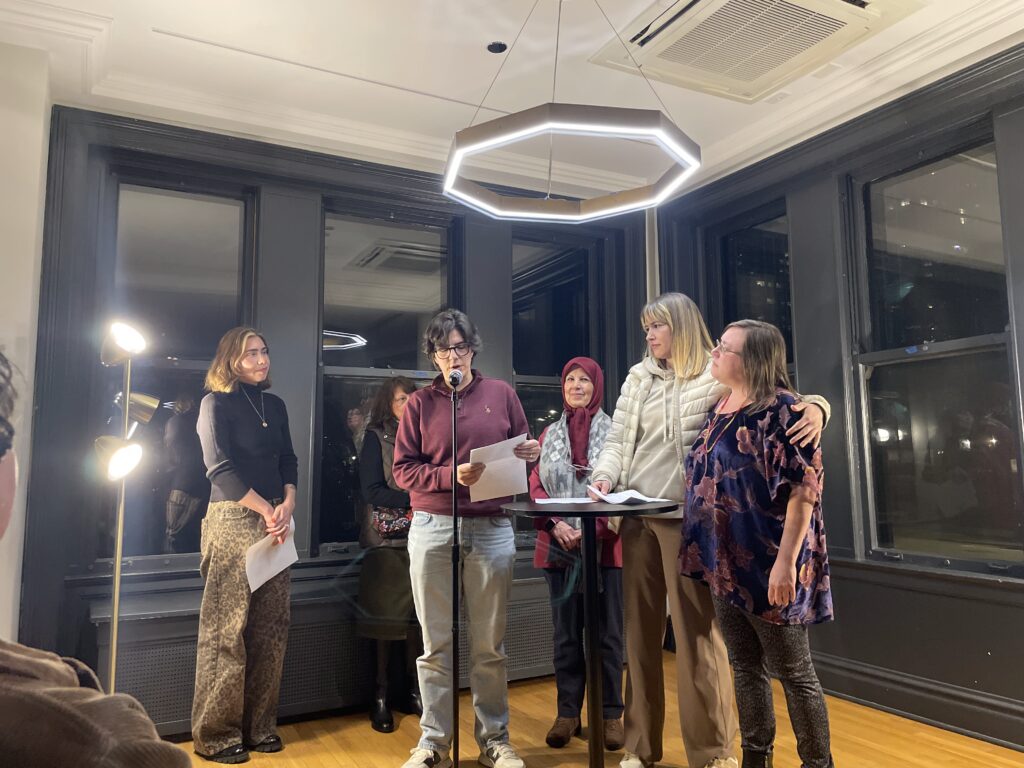
They read what Gwendolyn Brooks might call “relevant poems.” There was little mystery in these poems. These were poems about how fucking hard it is to be an immigrant in the United States, a country that says “give us your poor, your tired, your huddled masses / so we can kick the shit out of them, and make them do menial labor that we don’t wanna do, and then kick the shit out of them some more.” There was fear in these poems. There was also community, gratitude for friends found. These were not hopeless or angry poems. These were the most human poems you’ll find anywhere.
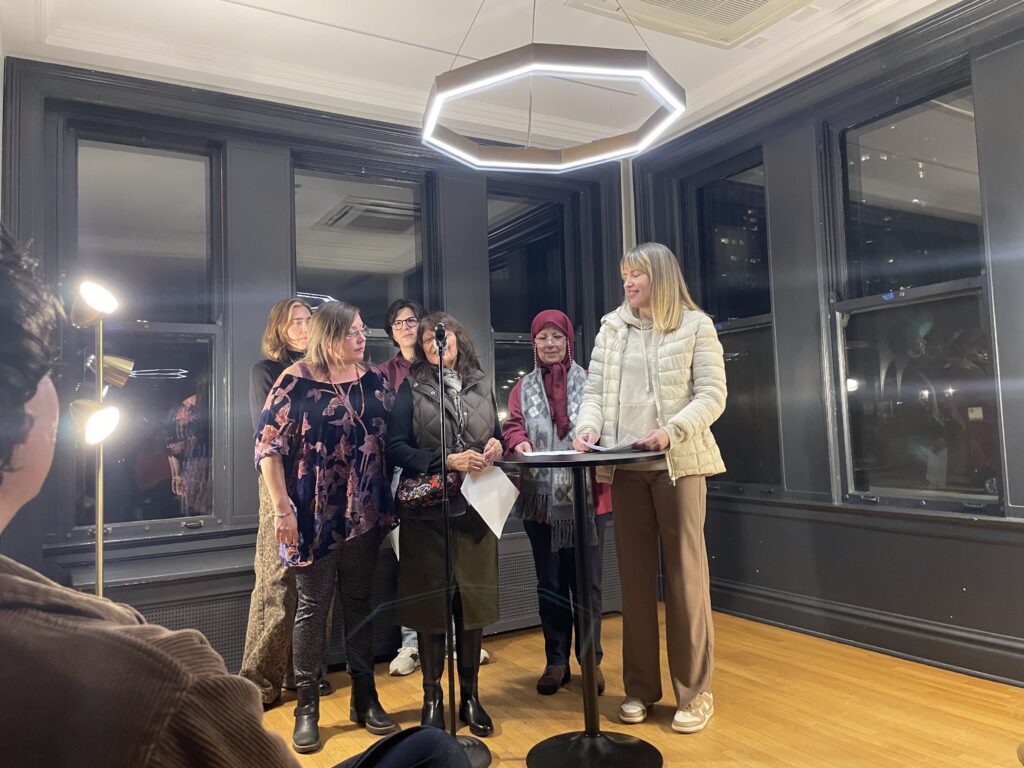
When each poet finished, the room absolutely erupted. It was like the crowd wanted to wrap their collective arms around these poets.
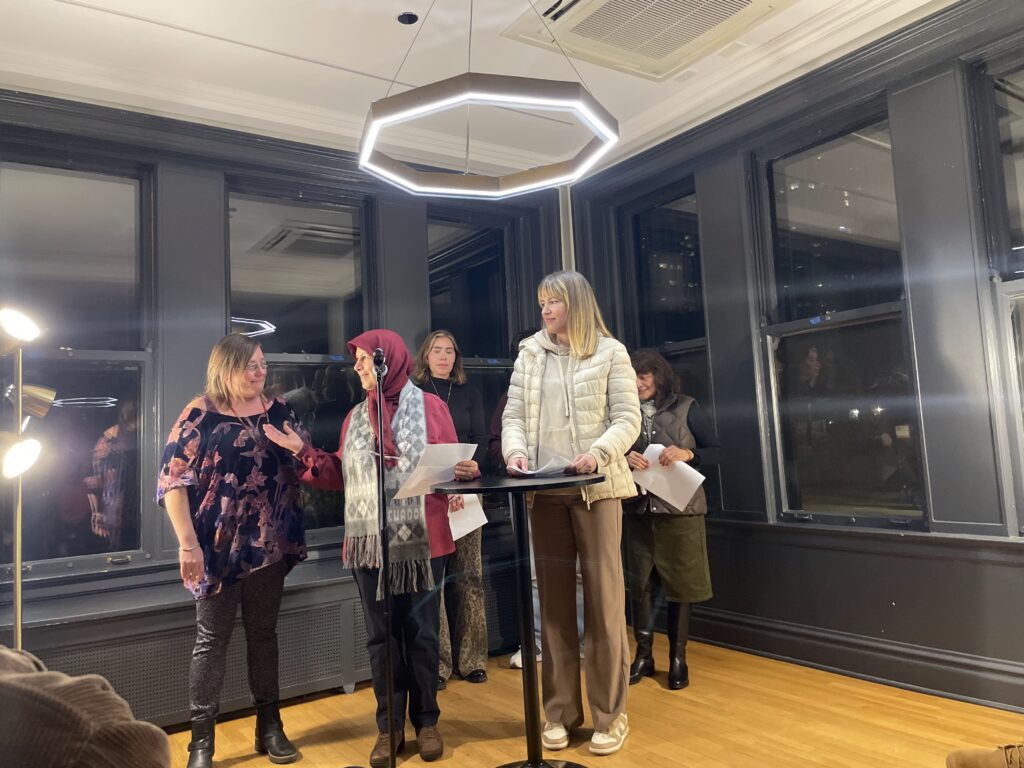
After the collective finished, Kenyatta got back up on mic and said something to the effect of “[deep exhale] that was fuckin amazing.” The room erupted once again. How else could anyone react to what we had just witnessed.
Bummer for me, I had to dash out basically as soon as the reading ended. Mallory texted saying our kid had a 100-degree fever. Being the incredible and supportive partner she is, she told me not to rush home. Since we can probably count the number of fevers this seven-year-old has hand in his life on one hand, I absolutely rushed home. He was fine by midday Saturday. He will live to one day yank the José Olivarez books off the shelves and have his world split open. Neither Mal nor I got sick, either. Happy endings all around.
But I was still buzzing about the reading, which I figure is what the blog’s for. Recounting it here has me amped up all over again. In a world that is increasingly dominated by doom narratives in which I am powerless do anything—as I am finishing this on Tuesday morning, the President of the United States has threatened genocide against the Iranian people—it helps, knowing that this many people in my city are ready to stand up and fight ICE. Or at the very least, put some money into the effort. Oh, and all these ICE-fighters like poetry, too.
It’s no secret, if you talk to me for even five minutes, that I bring politics into my art. I don’t quite feel responsible, or something, if I’m not connecting my artistic work to something beyond myself. Brendan and I started the Lazy & Entitled Reading Series last year, and set the modest goal of doing two readings a year. It had been a while since we’d thrown a show, and we didn’t want to bite off more than we could chew. Something like what Ben, Kenyatta, and their collaborators did on Friday—throwing a huge, raucous, unpretentious-yet-serious reading that brought community together and put real money in the hands of an organization doing real, necessary work—that’s aspirational for me. One reason I’m grateful to have become friends with Ben in the last couple of years is because he makes these things seem extraordinarily doable. He’s an inspirational contributor to the scene. Harnessing that power to provide aid to immigrants and refugees and fight the Legalized Klan—that’s what more of us should be doing.
Sorry you got an email,
Chris
One thought on “Poetry For The People”