
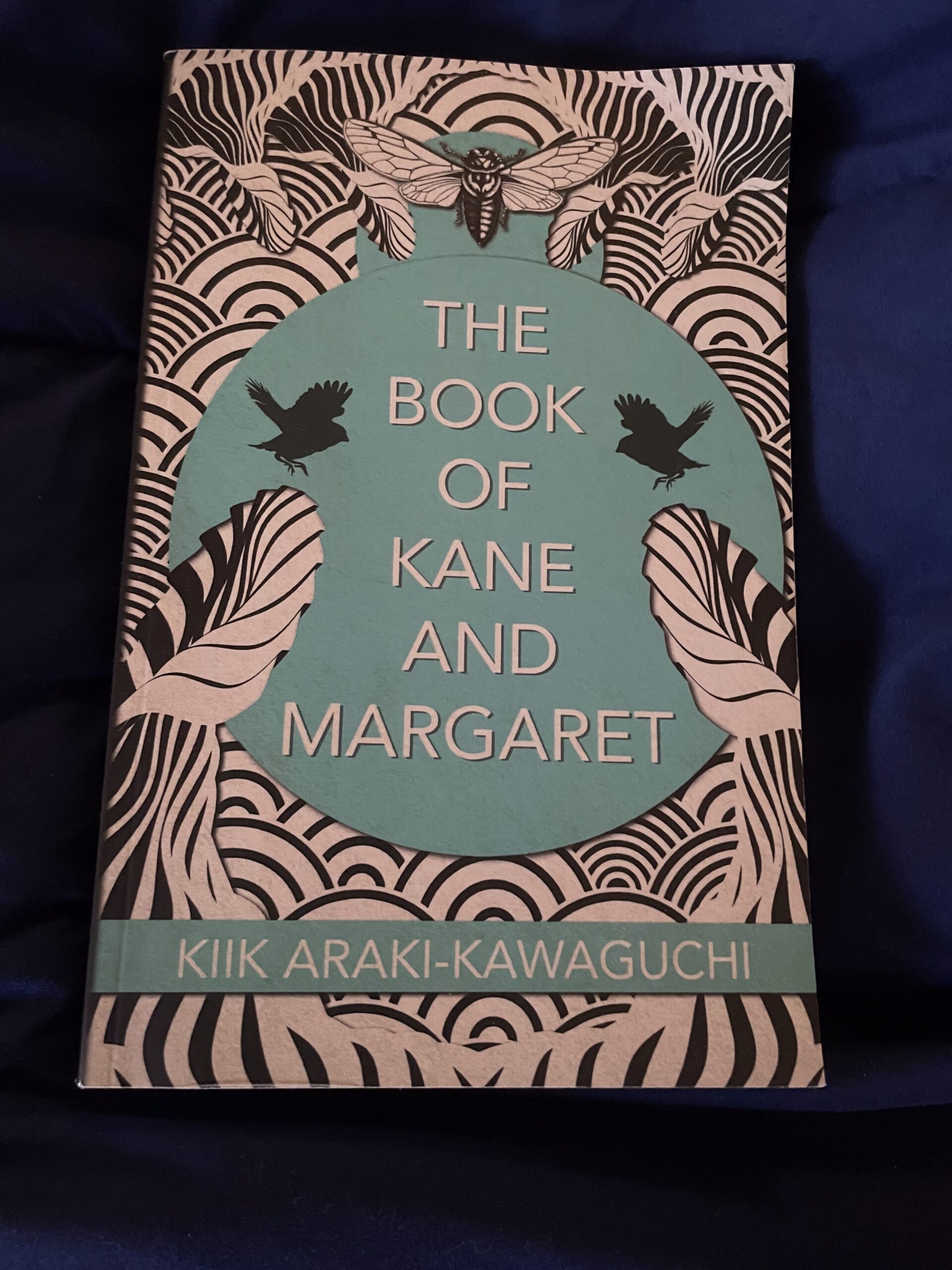
“What devil was known to be so cowardly as to exclusively menace a young boy? Who was the cowardly monster that would not risk showing himself in the flesh? Who preferred the fog and primordial terror of a child’s dreams?” – Kiik Araki-Kawaguchi, ‘The Book Of Kane And Margaret’
Hey, it’s NBA conference finals time! How about that Dylan Harper? Julian Champagnie and Keldon Johnson, utterly fearless? Stephon Castle, being awesome even when he commits way too many turnovers and stupid fouls? Devin Vassell, holding it all together? Oh, and a seven foot five guy did this:
Let’s get to the literature before I have a heart attack. I don’t care that OKC evened the series two nights ago. Also I’m writing this before the Knicks’ inevitable stomping of the Cavs in Game 2. As Patrick Redford said, the Cavs-Pistons round two was mutual fraudmaking. I will enjoy the game tonight (last night to you), but nothing is getting me jacked like Spurs-Thunder. Anyway, to literature!
What I’ve Been Reading This Week
A novel written by poet—are there any more exciting words in all of literature? Yet this is more like a novel in stories, maybe. It’s an AWP pickup from the FC2 table, always a good stop. It’s also a book by a former The Line Break guest—and hey look at that, we’ve got a new The Line Break podcast this week (Apple | Spotty). But we’re talking about this book right now, this novel-in-stories written by a poet and published by FC2. Aren’t you drooling? I was drooling. I’m talking, of course, about The Book Of Kane and Margaret by Kiik Araki-Kawaguchi.
The Book Of Kane And Margaret by Kiik Araki-Kawaguchi: about 50 pages into this book, I pulled out my phone and typed “Macondo in a U.S.-run internment camp for Japanese-Americans?” After finishing the book, I’m not sure if that’s totally right, but it’s not far off. Kane Araki and Margaret Morri are two names in the Gila River internment camp, but who they are changes each chapter. Sometimes they are teenaged lovers, elderly lovers, or a divorced couple. Sometimes they are gorgeous, sometimes their appearance is unremarkable. Sometimes Kane sprouts black wings and Margaret communes with the devil. In the dedication page, Kane and Margaret are Kiki’s real-life grandparents. The point is, don’t go looking for overarching narrative or easy metaphor. Each chapter presents a new version of Kane and Margaret. If you want to view this as quantum fiction, no one is stopping you, but the novel (mercifully) does not treat itself as the text of the multiverse. There’s no grand triumph, either. They pull scams over on internment camp guards, especially securing contraband whiskey and cigarettes. But there’s no escape, or destruction, or homecoming. Any reference to life after internment sees the characters’ homes ransacked and vandalized.
An interesting thing I’m not sure how to express properly: this novel is singular and inventive, but I can’t say I haven’t read anything like it before. This approach to fiction/poetry is a mini-genre in itself, but I don’t think I’ve ever read a novel like this. Usually this convention—[character name] is a different version of themselves from the previous sentence/paragraph/stanza—is a short story or poem, often a list poem. Kiik, for example, has a series of poems in his second book, Disintegration Made Plain And Easy, called “about the author.” These poems feature lots of often hilarious and contradictory statements about, well, the author. Using this convention for a whole novel is fascinating and a brave choice. At times I caught myself yearning for a little more of a narrative to hang onto, but I think that’s more a me problem than the book’s problem. We’re coming off National Poetry Month, and I’m craving a good narrative novel. If we were coming off National Pulp Fiction Month, I’d probably be like WHY AREN’T ALL BOOKS THIS BOOK. I very much want to stress that Kiik is a funny and inventive and totally unique author whose books are a blast to read.
It’s becoming a theme on this blog to say that a book is about living during something terrible and tragic going on, with emphasis on living. Not to be obvious, but there’s an inherent tragedy to being in an internment camp. This novel is not specifically and single-minded focused on this, though. Each chapter is a story of life being lived, of people being people in spite of overarching circumstances. Part of the reason I’m highlighting this in books is because one-note books can be boring and overwhelming. The other part, I think, is that I’m attracted to stories of people going on despite the ostensibly worst thing happening to them, people enjoying the taste of fruit or the feeling of swimming or the smell of lilacs despite whatever else is happening. The ostensible theme of the blog this year is anarchism and punk rock. Living in spite of, creating community in spite of. I’m not going to say something cringe like “surviving an internment camp is punk rock,” because that’s not what I’m getting at. More like that sentiment from George Hurchalla‘s book, “doing something because if you don’t, there will never be anything to do again.” No matter their extraordinary and dehumanizing circumstances, the Kanes and Margarets and everyone else at Gila River still have that ungovernable humanity to them.
LINKS!
Something to listen to while you browse? Maybe some JYOCHO?
- This week in ICE: ‘Starting From Zero Again’ by Dave Byrnes in South Side Weekly, DACA Renewals Are Being Delayed — Here’s What To Know by Aydali Campa in Borderless, Chicago legal reform group lambasts Cook County State’s Attorney Eileen O’Neill Burke in new report by Dave Byrnes in Unraveled, Charges Against Broadview Protesters Dropped After Feds Admit To Grand Jury ‘Errors’ by Madison Savedra and Melody Mercado, Judge Denies Petition To Appoint Special Prosecutor To Probe ICE Abuses by Molly DeVore, and Feds Accuse Chicago Man Of Assaulting ICE Agent Using His SUV by Stephen Montemayor in Block Club.
- From the end of 2025, but a wonderful Kelly Dwyer piece on guitars and amps
- Alex Niemi: On Novels by Poets, the Hyper-Reality of the Internet, and the Importance of Sonic Suspense in Her Translation of Laura Vazquez’s Novel ‘The Endless Week’ by Corinne Cordasco-Pak in Write Or Die
- Beating the Algorithmic Pulse by Ellie Gilbert-Bair in South Side Weekly. Subhed: From purchasing songs on Bandcamp to visiting listening bars, here are some ways you can help Chicago’s music scene thrive beyond streaming. Hey, at Lazy & Entitled, we like to tell you to break the algorithms. Good to know other Chicagoans are doing the same.
- Really, really loved Lydia Bugg’s deep dive on 1-900-HOTDOG into Seth Green’s ill-fated NFT show, which helped kill NFTs! Like Lydia, I generally like Seth Green’s work. Even if I like White Horse Tavern for mean reasons (people who get into NFTs should be humiliated and the NFT industry needed to die), chalk up another win for Richie Tozier.
What’re you still doing here? Need to groove to some Happy Imaeda to carry you into the weekend?
If you work in the service industry, may you clean up in tips this weekend. May one of your customers dig you a pool. May you sprout bat wings and fly away when your shift ends.
Sorry you got an email,
Chris